Llama model
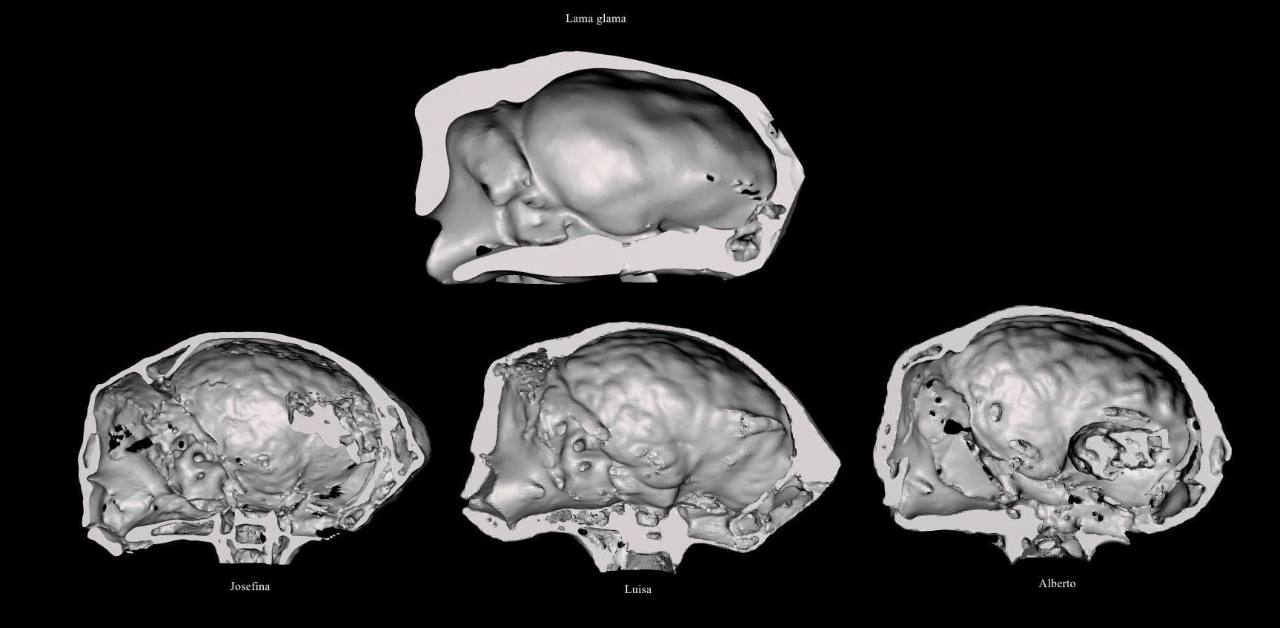
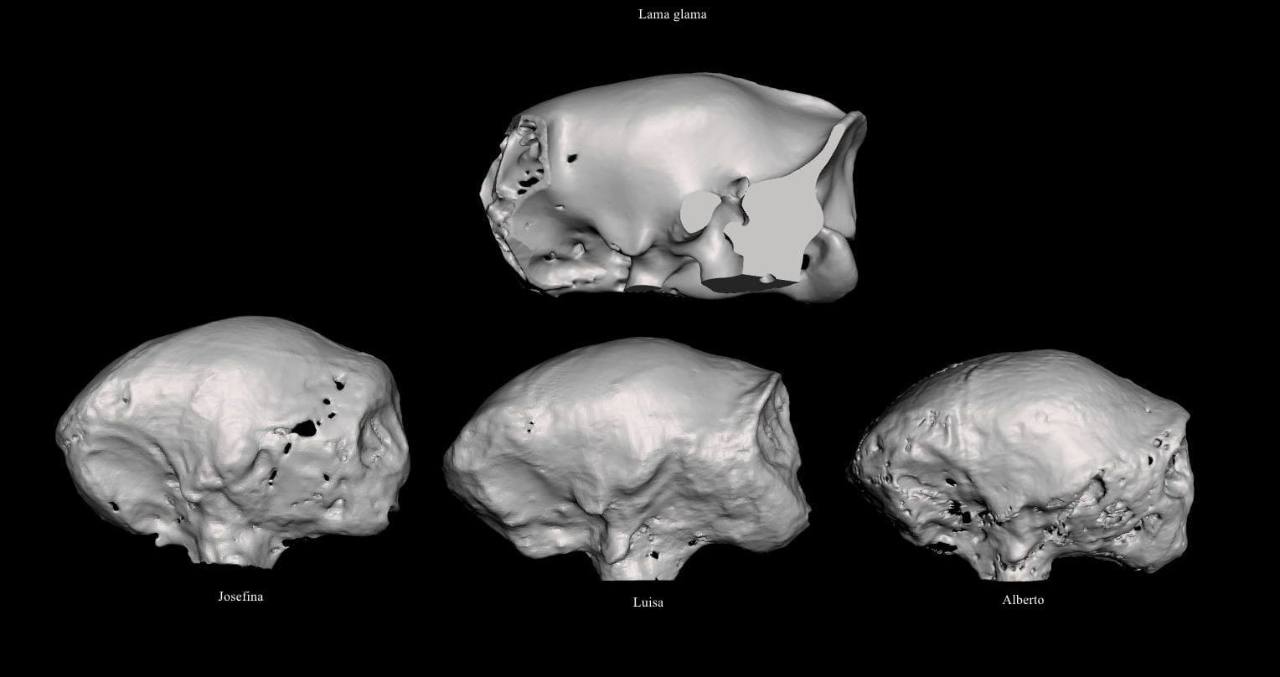
A Lama glama 3D CT model from DigiMorph was digitally dissected and reversed back-for-front as the reversed dissected llama cranium (RDLC).

This comparison uses a complete Lama glama 3D CT model from DigiMorph and DICOM CT datasets for the 60 cm tridactyl specimens Josefina, Luisa and Alberto. The models were reconstructed and compared at accurate scale using equivalent views and cut sections.
“The tridactyl skull is natural and is different from the llama skull.”
The report compares one complete Lama glama skull model with the skulls of Josefina, Luisa and Alberto and concludes that the structures cannot be the same anatomy.

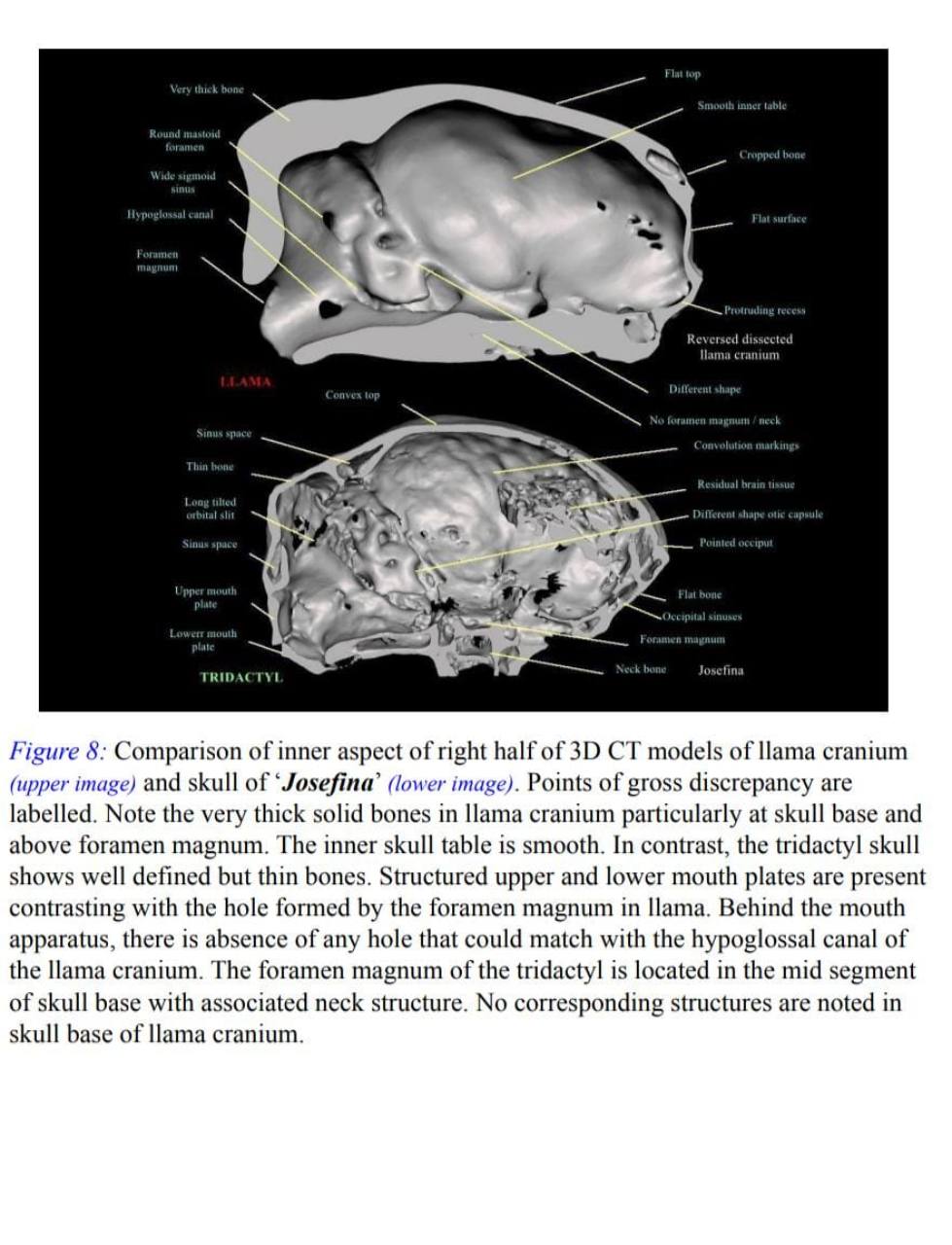
Viewed at matching angles, the llama and tridactyl skulls remain anatomically distinct: the llama has thick, smooth bone, while the tridactyl specimens show thin bone, pronounced internal markings, structured mouth plates and a different skull base.
A Lama glama 3D CT model from DigiMorph was digitally dissected and reversed back-for-front as the reversed dissected llama cranium (RDLC).
DICOM CT datasets for Josefina, Luisa and Alberto were modeled with shaded-surface display (SSD), exported as .stl and segmented in Meshmixer.
Accurate-size CT models were compared vertically and in equivalent cut sections to reduce parallax error.
The llama cranium is larger overall, flatter at the top and built from much thicker, smoother bone.
Tridactyl skulls show thin intact bone, prominent internal convolution markings, large orbital rims and elongated slanting orbital fissures.
The llama foramen magnum, external sagittal crest, mastoid foramen and posterior structures do not map to the tridactyl mouth, orbit or skull base.
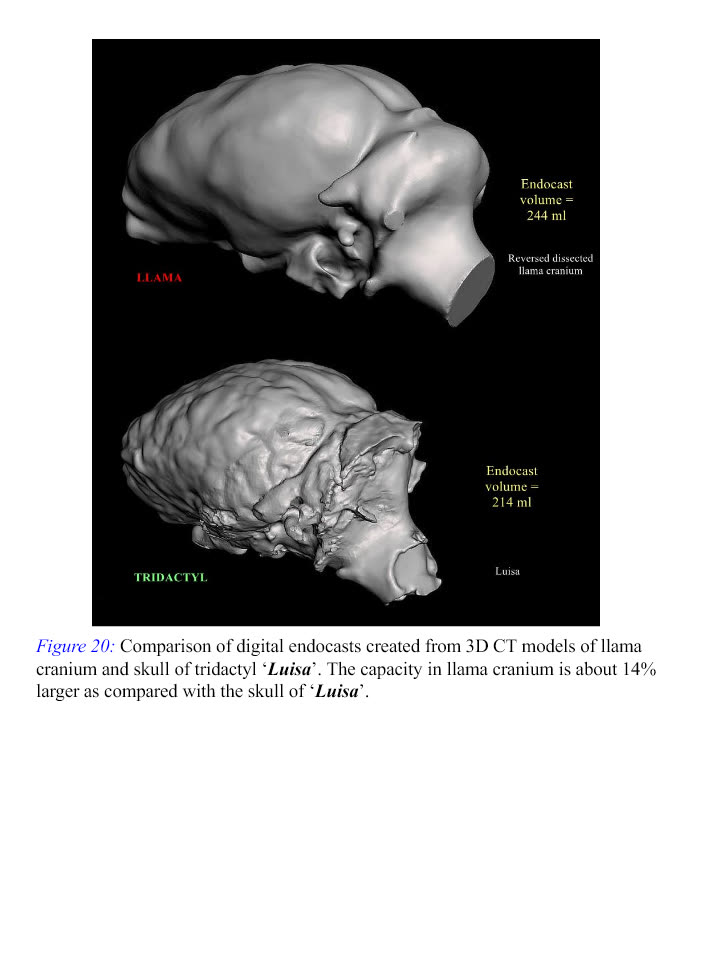
The report describes facial bony depressions, sinus spaces, different otic capsules and distinct digital endocasts.
| Feature | Llama cranium | Tridactyl skull |
|---|---|---|
| Size | Llama craniumLarger overall | Tridactyl skullSmaller |
| Bone thickness | Llama craniumThick (twice or more) | Tridactyl skullThin |
| Endocranial volume | Llama cranium244 ml (12% larger in Figure 21 table) | Tridactyl skull214 ml |
| Cranial vault | Llama craniumSolid | Tridactyl skullNumerous sinuses |
| Inner surface | Llama craniumSmooth | Tridactyl skullConvolution markings |
| Foramen magnum | Llama craniumAnterior | Tridactyl skullInferior |
| External sagittal crest | Llama craniumProminent | Tridactyl skullAbsent |
| Mouth plates | Llama craniumNone | Tridactyl skullSuperior and inferior |
| Facial heat pits | Llama craniumNone | Tridactyl skullThree large depressions |
| Other body parts | Llama craniumNot available | Tridactyl skullComplete body |