Material reviewed
Miles describes eight primary individuals and later notes three additional specimens. Most of the study focuses on NA-01 through NA-05, using X-rays, CT scans and published imagery.

This page summarizes the anatomy-focused portions of The Miles Paper, including the principal osteological study, its anatomical addendum and the later pages describing Maria and the separate tridactyl hands.
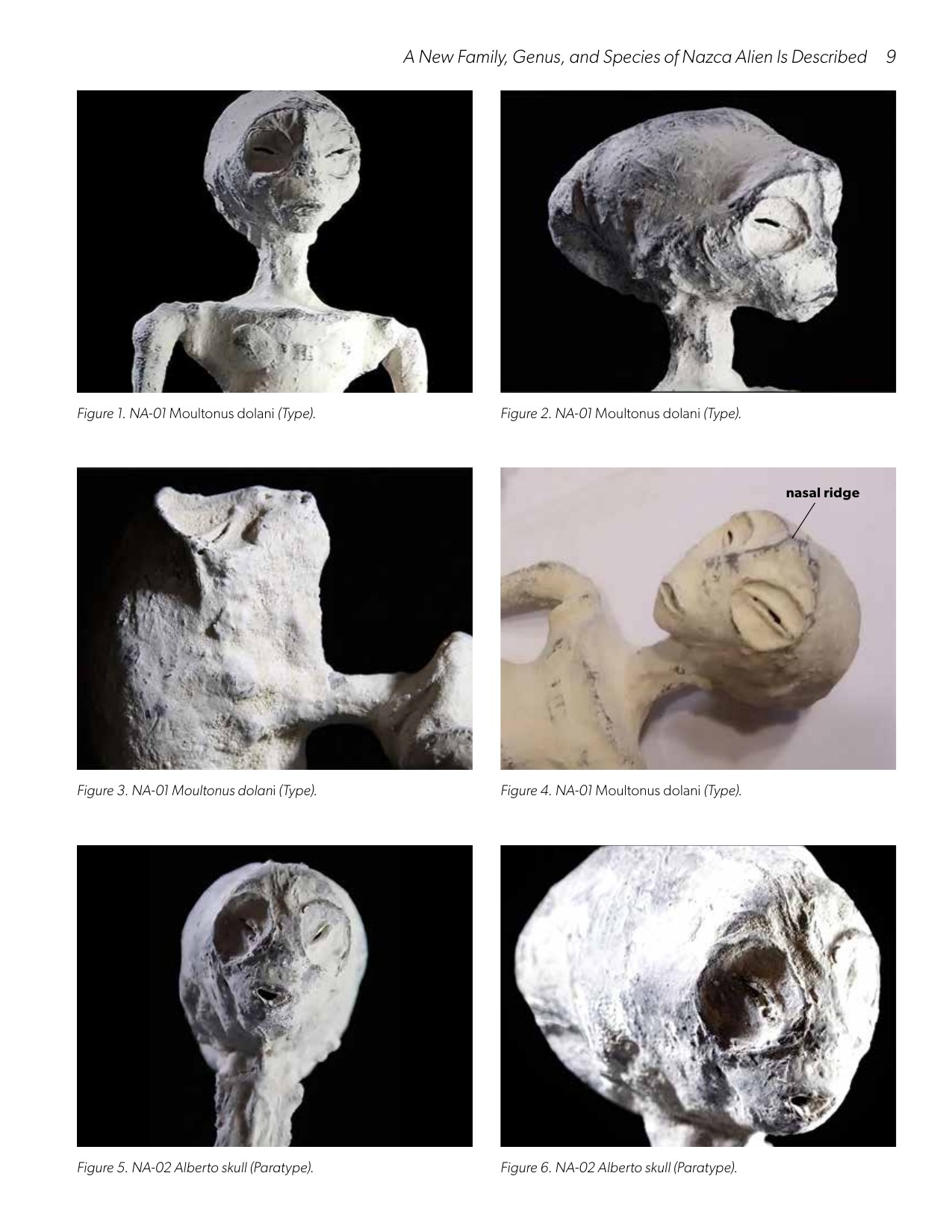
Miles proposes that the small Nazca specimens represent a new family, genus, and species, which he names Moultonus dolani.
His argument centers on a combination of features he considers absent from known terrestrial vertebrates, especially a single forearm bone and a single lower-leg bone. This page presents the author's interpretation of the scans; it does not treat the proposed taxonomy or origin as an independently established scientific consensus.
Miles describes eight primary individuals and later notes three additional specimens. Most of the study focuses on NA-01 through NA-05, using X-rays, CT scans and published imagery.
NA-01, originally called Josephina in the paper, is designated as the holotype. NA-02 Alberto, NA-05 Victoria and the loose skulls are treated as paratypes.
Miles states that he did not have direct access to the bodies. His description draws on scans, documentary images and earlier work by Dr. Dmitrii V. Galetskii and Dr. Konstantin Korotkov.
A 57.7 cm upright biped with an elongated skull, large forward-facing eye sockets, no teeth and upper and lower mouth plates.
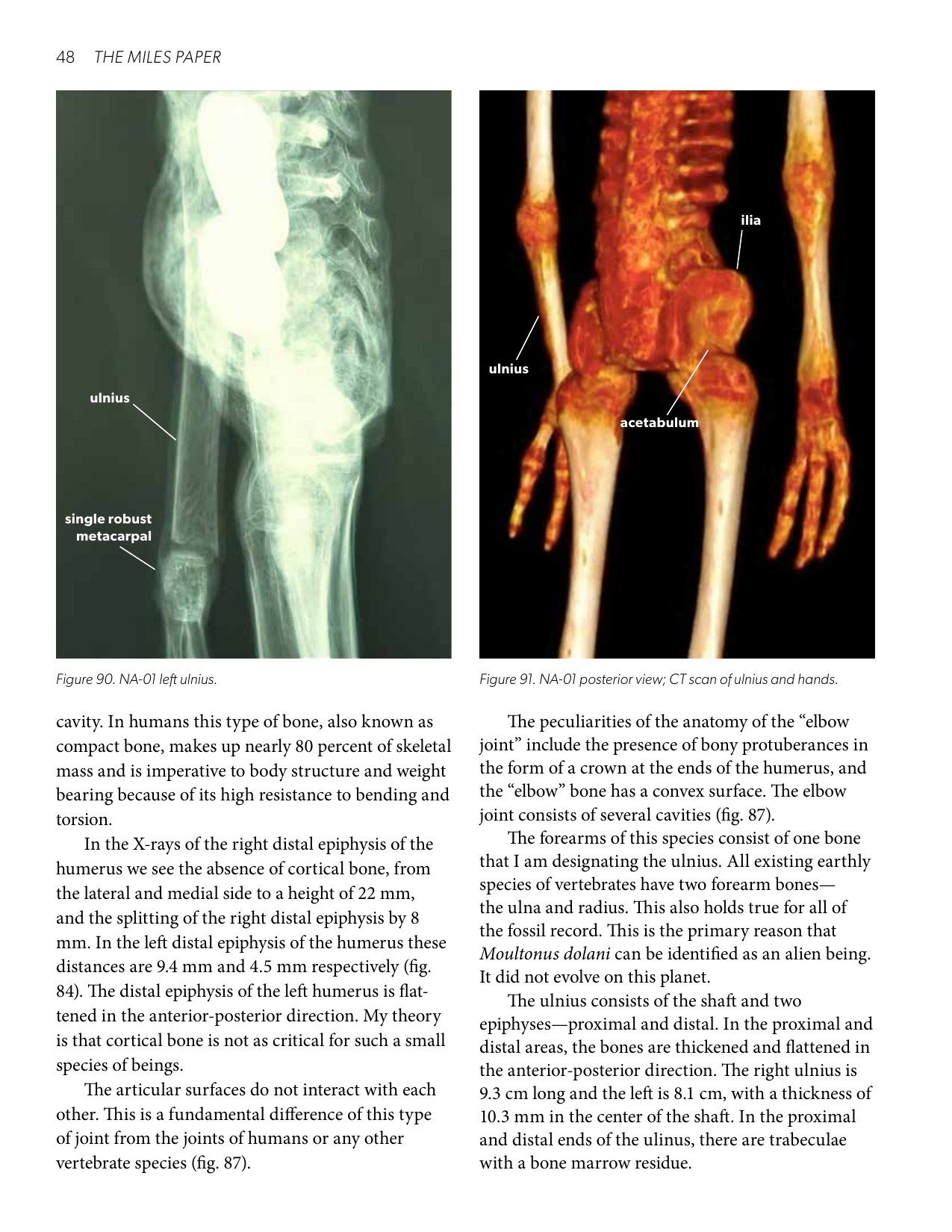
A single forearm bone, named the "ulnius" in the report, instead of separate radius and ulna bones; the lower leg is described as having a tibia but no fibula.
Three-fingered hands with one robust carpal, three metacarpals and three phalanges per finger, with no opposable thumb.
A vertebral formula of 5 cervical, 17 dorsal and 5 sacral vertebrae, with horizontal ribs beginning at dorsal 7 and reported gastralia beneath the trunk.
A reduced pelvic construction without a complete pelvic girdle; the ilia sit over the femoral heads and the report describes a cloaca-like opening.
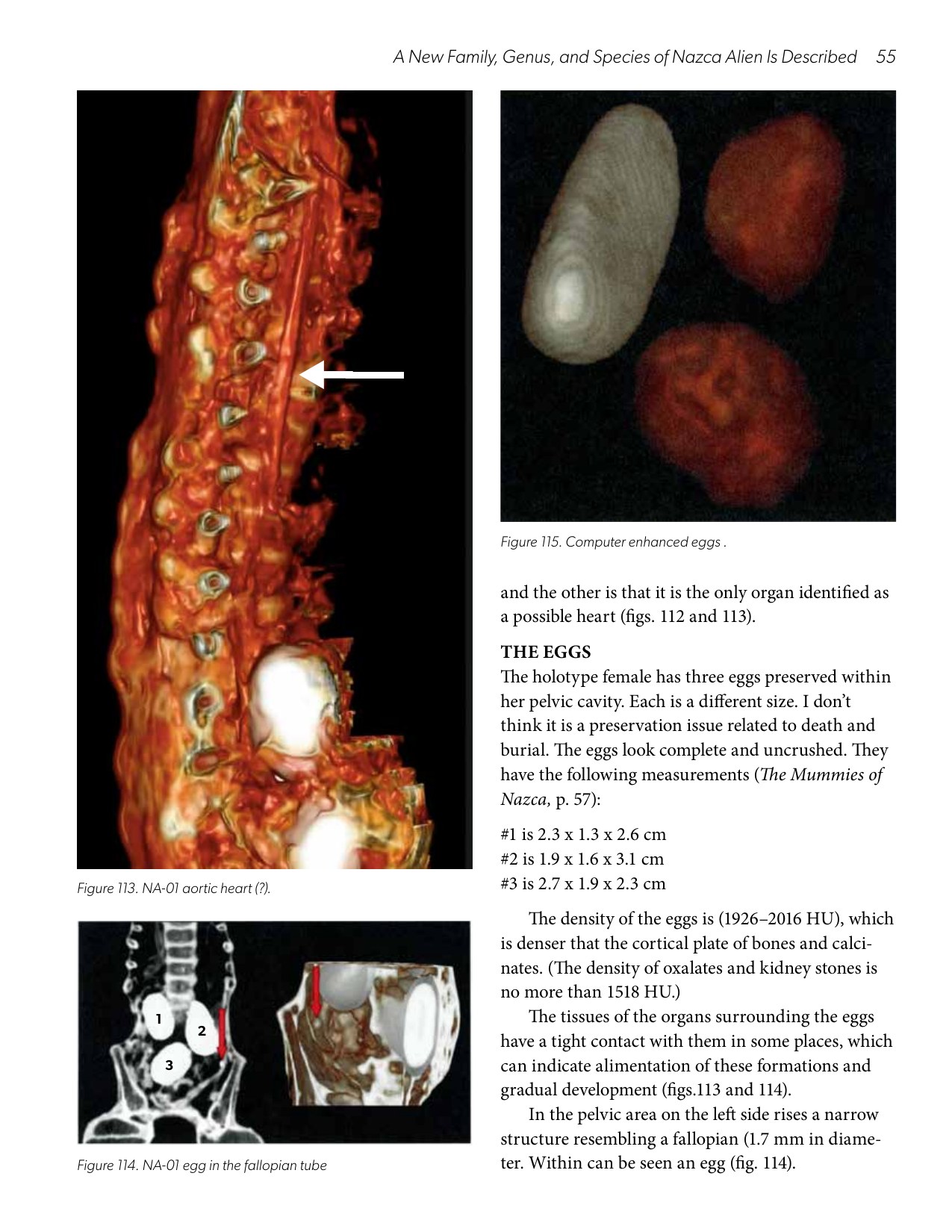
Three dense egg-shaped structures within NA-01's pelvic cavity, which the author interprets as eggs at different developmental stages.
| Region | Description in the report | Why Miles highlights it |
|---|---|---|
| Skull and feeding | Description in the reportElongated skull, shallow eye sockets, no teeth, and articulated premaxillary and predentary plates. | Why Miles highlights itThe report interprets the plates as a unique feeding mechanism suited to soft or liquid food. |
| Neck and spine | Description in the reportCentered foramen magnum and 27 vertebrae: 5 cervical, 17 dorsal and 5 sacral. | Why Miles highlights itMiles connects the centered neck and unusual rib-bearing pattern to upright posture and a distinct body plan. |
| Chest and shoulders | Description in the reportHorizontal ribs, gastralia, no sternum, and clavicles that meet at the chest midline. | Why Miles highlights itThe report describes a chest structure combining features that Miles compares with reptiles and mammals. |
| Arms and hands | Description in the reportOne forearm bone, one carpal, and three long fingers without an opposable thumb. | Why Miles highlights itThe single forearm bone is the report's central argument for anatomy outside known terrestrial lineages. |
| Pelvis and legs | Description in the reportNo complete pelvic girdle; shallow femoral support, one tibia per leg and no fibula. | Why Miles highlights itMiles considers the simplified lower limb and joint construction fundamentally different from humans. |
| Reproduction | Description in the reportThree egg-shaped pelvic structures measured between roughly 1.9 and 3.1 cm across their reported axes. | Why Miles highlights itThe author interprets their different sizes and CT density as evidence of eggs developing at different stages. |
These full-page plates retain the report's original labels and context. Open any image for a closer view.
Open the focused 76-page edition containing the portions of the October 2022 paper that directly address tridactyl anatomy.