
Cambiar idioma
Comparative Analysis of Maria and Montserrat
In 2017, three-fingered mummies were discovered in the Nazca region of Peru. DNA analysis and radiocarbon dating have revealed that these mummies, Maria and Montserrat, are approximately 1800 years old and exhibit unique anatomical features, such as tridactylism and elongated skulls, suggesting a possible new humanoid species (Homo sapiens Nazca proposed). The arid conditions of Nazca favored natural mummification.
Note: All key facts were analyzed by ChatGPT from the PDFs.
Images of Maria and Montserrat
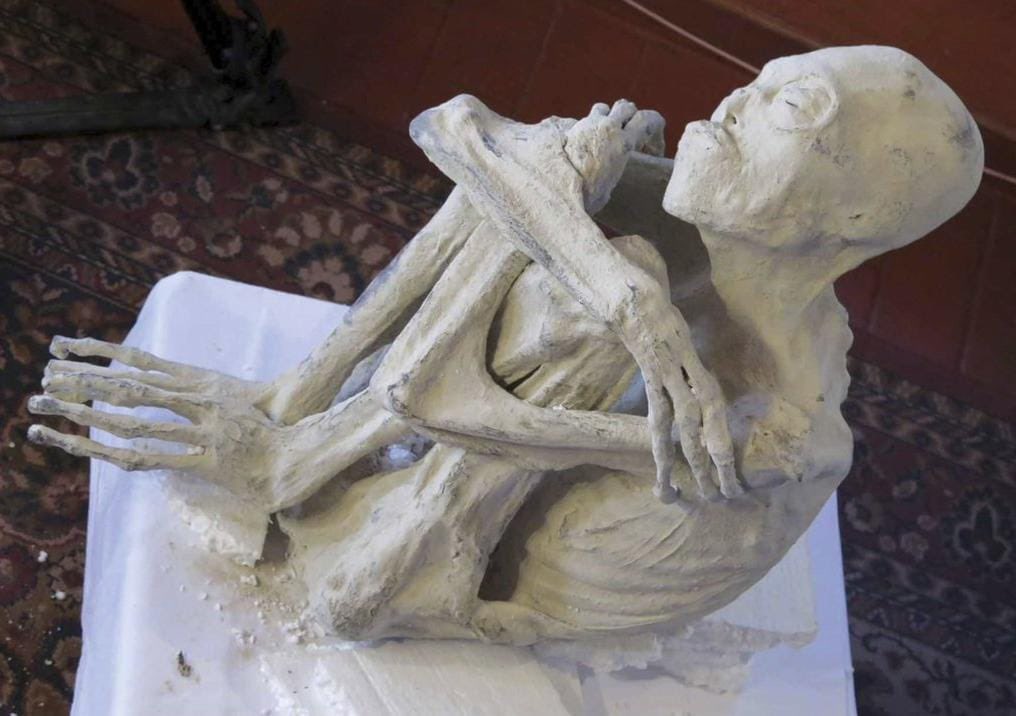
María
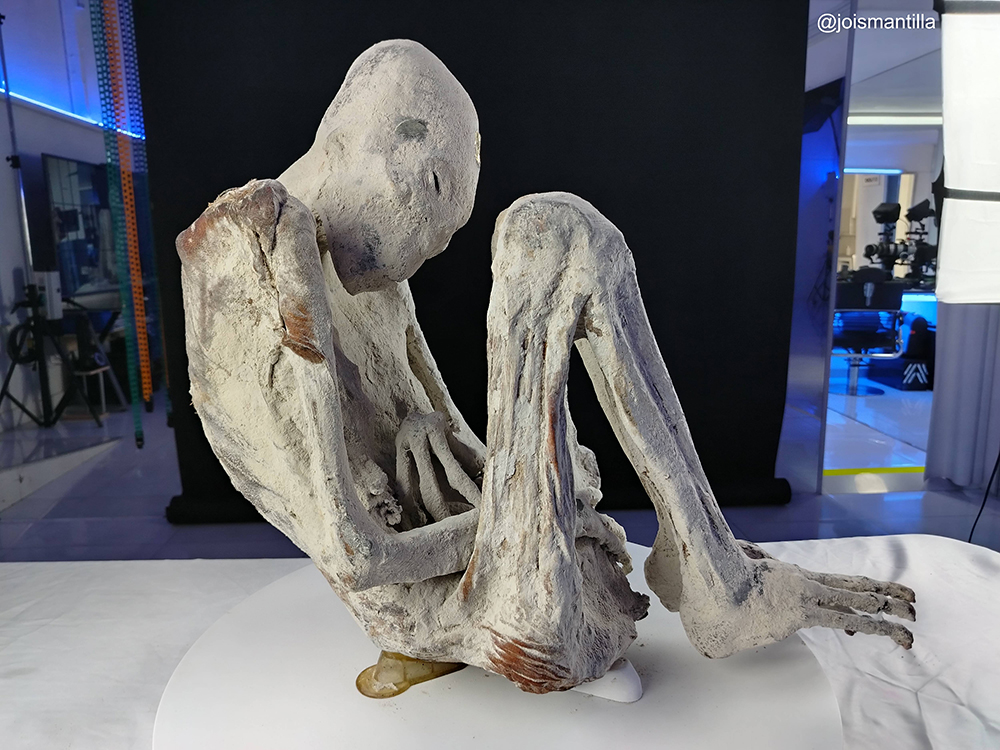
Montserrat
Key Findings on Maria and Montserrat
María
- Age at death: 35–45 años
- Height: 168 cm (5'6")
- Body position: Lying on right side, arms crossed, knees slightly bent
- Skull: The cranium is of regular configuration, somewhat elongated in the anterior-posterior direction, the facial skull is flattened. The face is oval, the forehead is high, a pronounced frontal tubercle is defined. Brain remains detected.
- Hands: Three fingers (each with 3 phalanges), only three metacarpals
- Feet: Three toes, reduced tarsal bones
- Organs: Heart, liver, intestines identified; bladder and kidneys difficult to identify
- Injuries: Bite marks (possible puma), fractures (scapula, ribs), hematomas, trauma without healing
- Implants: None detected
Montserrat
- Age at death: 16–25 años
- Height: 160 cm (5'3")
- Pregnancy: Pregnant with ~30-week fetus
- Body position: Knees flexed, arms over abdomen and perineum
- Skull: The cranium differs from that of individuals with normal anatomy - it is elongated in the anterior-posterior direction - signs of dolichocephaly. Flattened face, no external nose, sloping forehead. Brain remains detected.
- Hands: Three fingers (each with 3 phalanges), tendons preserved
- Feet: Three toes, clubfoot, reduced heel
- Organs: Heart, intestines, liver detected; kidneys not visible
- Injuries: Pregnancy-related trauma, no bite wounds
- Implants: Metallic-density bodies in head, hands, chest
Similarities between Maria and Montserrat
- Three fingers and three toes (tridactyl anatomy)
- Elongated skulls (dolichocephaly)
- Natural internal organs (heart, liver, intestines visible)
- Flattened faces with high foreheads
- Brain remains detected inside the skulls
- No signs of forced bone removal or assembly
- Three metacarpals/metatarsals per hand/foot
- No external auricles (ears), no signs of violent removal
- Nasolacrimal ducts present and normal
Differences between Maria and Montserrat
| Feature | María | Montserrat |
|---|---|---|
| Age at death | 35–45 años | 16–25 años |
| Height | ~168 cm (5'6") | ~160 cm (5'3") |
| Pregnancy | Not pregnant | Pregnant (fetus ~30 weeks) |
| External nose | Present but deviated | Absent, nasal passages covered by skin |
| Facial features | Swelling in eyelids and lips | Flattened face, sloping forehead |
| Injuries at death | Possible fall, animal bite, fractures | General trauma, no bite wounds |
| Implants (metallic bodies) | None detected | Yes, in hands, chest, head |
| Animal attack signs | Yes (possible puma) | No |
| Bone fractures | Scapula and ribs fractured | Less extensive fractures |
| Fetal presence | None | Fetus confirmed by CT |
| Body position at death | Lying on right side | Fetal position, collapsed after trauma |
Research Document
Comparison on Nazca Mummies CT
Key Facts
- CT scans confirm Maria and Montserrat are real biological beings with natural mummification.
- Anatomical differences (tridactylism, elongated skulls) suggest a distinct human-like species.
- Despite serious studies, mainstream science largely ignores the evidence.