
Tridactilos vs Reptilianos
Un estudio científico exhaustivo que compara las estructuras biológicas únicas de los especímenes tridáctilos con la anatomía humana moderna mediante tomografía computarizada avanzada.
Ensayo pictórico © K H Fung / Tridactyls.org
Tridáctilos humanoides frente a tridáctilos reptilianos
El Dr. Fung compara el grupo humanoide, descrito en el informe como homínido o humanoide, con el grupo reptiliano, descrito como reptiliano. El informe indica que ambos grupos comparten bipedismo y manos y pies tridáctilos, pero representan entidades biológicas completamente diferentes.
Todos los puntos siguientes están resumidos del PDF de publicación formal de junio de 2026 del Dr. K. H. Fung.
Especímenes referenciados en el informe
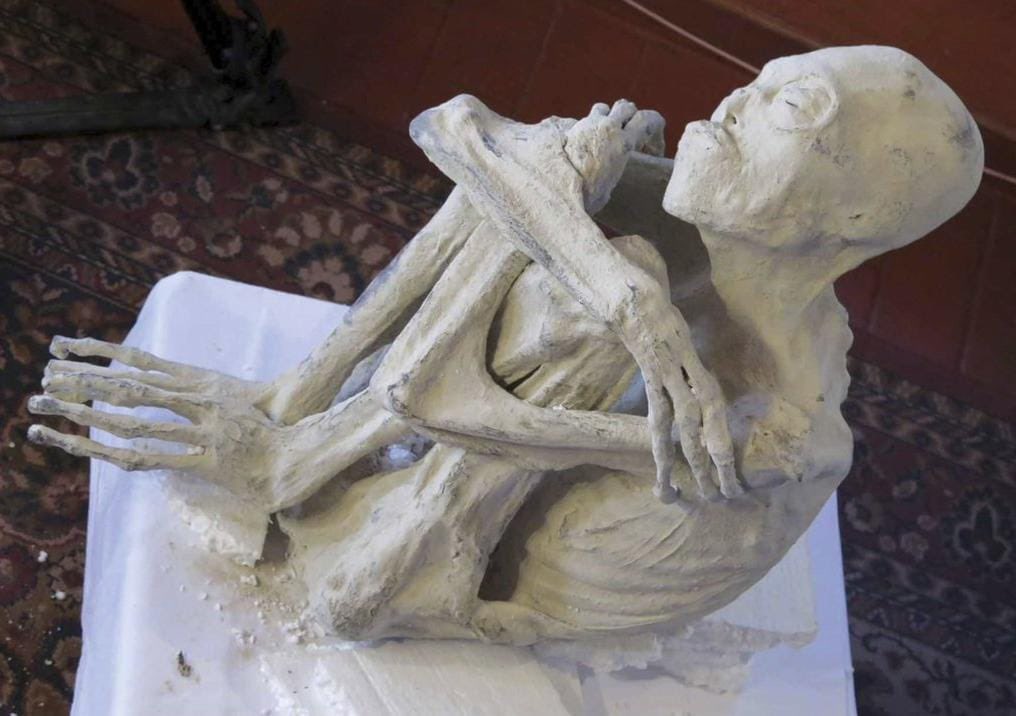
María
Espécimen adulto humanoide incluido en la comparación; el informe señala una fuerte semejanza humana con rasgos inusuales.
Saber más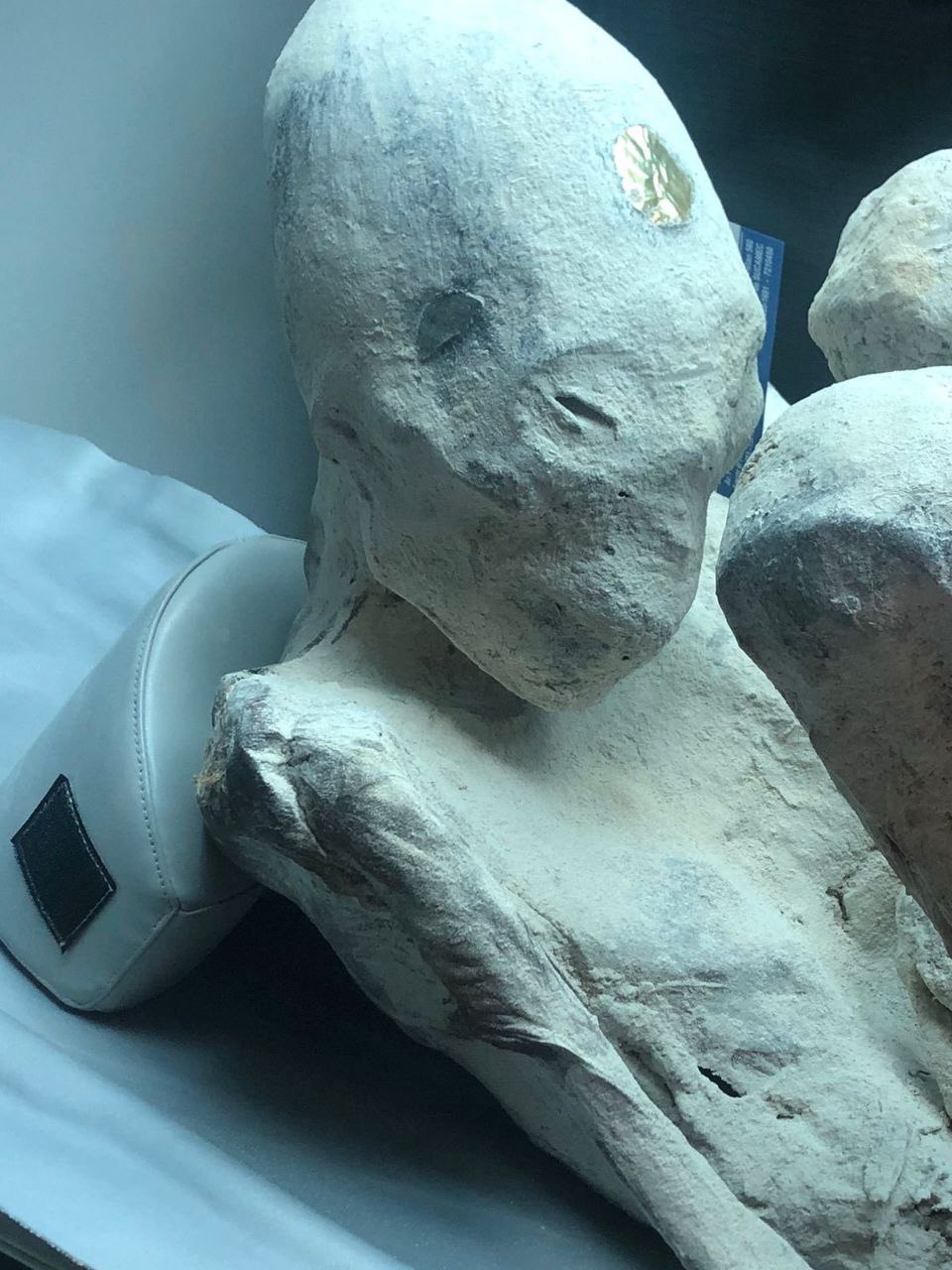
Montserrat
Espécimen gestante humanoide; el informe identifica un feto bien formado llamado Rafael.
Saber más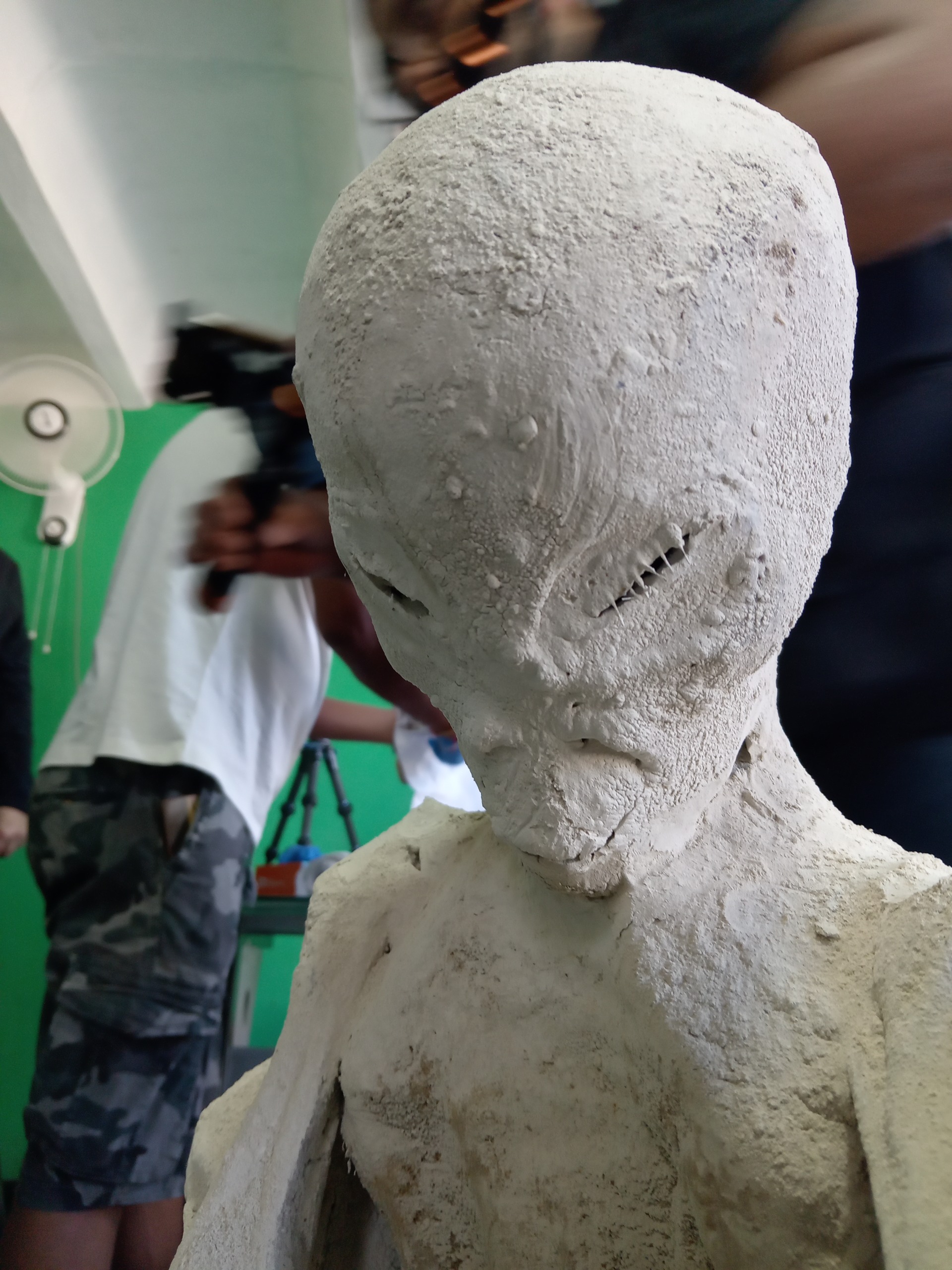
Sebastián
Espécimen infantil o adolescente humanoide; el informe analiza la fusión de un implante cervical y hallazgos espinales inusuales.
Saber más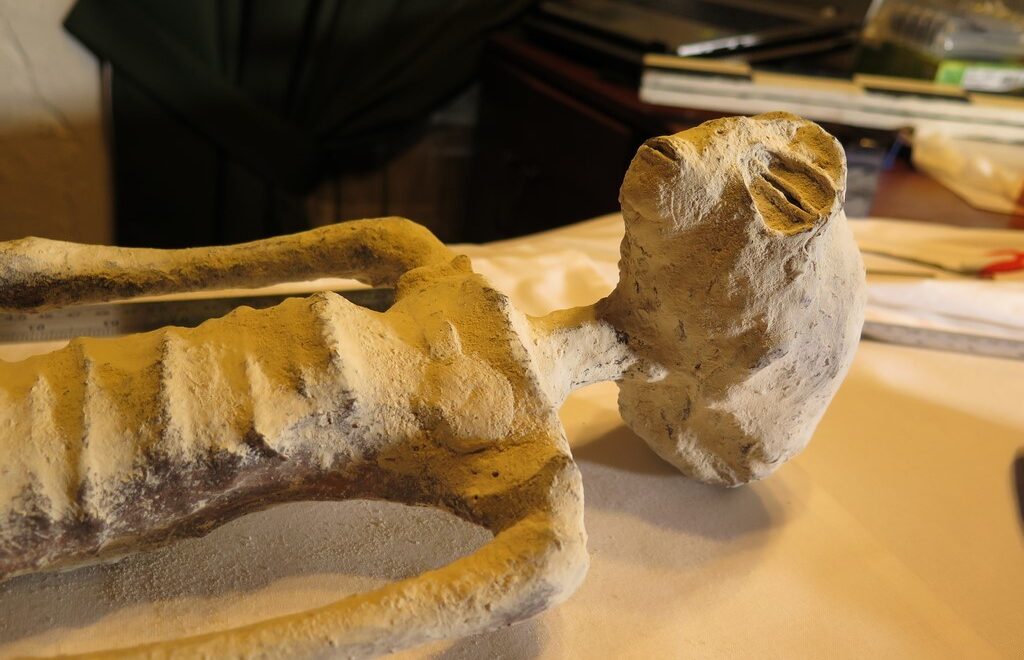
Josefina
Espécimen reptiliano; el informe describe textura cutánea reptiliana, huevos, gastralia e implantes torácicos en forma de mancuerna.
Saber más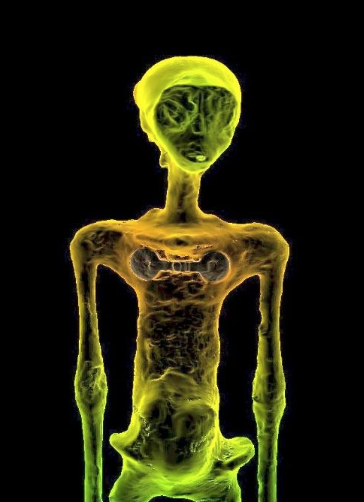
Luisa
Espécimen reptiliano mostrado en el informe junto a Josefina y Alberto; el informe señala huevos, hallazgos del hombro y anatomía distintiva de las extremidades.
Saber más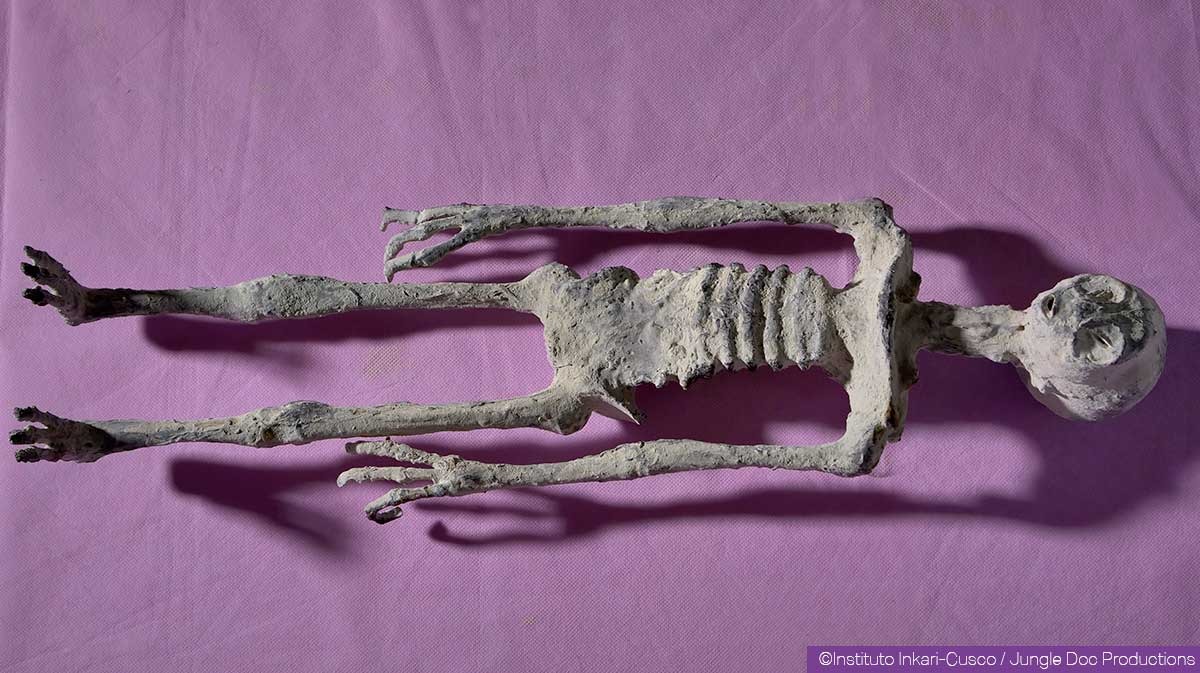
Alberto
Espécimen reptiliano con cuello notablemente largo; el informe describe anatomía distinta de los tridáctilos humanoides y un implante en la cadera derecha.
Saber másComparación respaldada por el informe
El informe afirma que ambos grupos muestran anatomía coherente, detallada, compleja e integrada, consistente con entidades biológicas que estuvieron vivas.
La conclusión indica que los rasgos reptilianos son únicos y no documentados en otros animales, incluyendo estructuras esqueléticas únicas, piel reptiliana, huevos, corazón tubular rudimentario, grandes vasos en el lado derecho y órbitas únicas.
| Tema | Humanoide | Reptiliano |
|---|---|---|
| Definición del grupo | Se los denomina homínidos, con fuerte semejanza humana pero con rasgos inusuales no observados en humanos modernos. Se incluyen María, Montserrat con Rafael y Sebastián. | Se los denomina reptilianos, de aproximadamente 60 cm de longitud, con anatomía muy diferente de la humana. El estudio incluye a Josefina, Luisa y Alberto. |
| Base compartida | Ambos grupos comparten bipedismo y manos y pies tridáctilos. | El informe señala la misma base compartida, pero concluye que los grupos son entidades biológicas completamente diferentes. |
| Preservación y superficie | Cuerpos desecados muy preservados con piel, dientes, huesos, músculos, ligamentos, tendones, fascia, órganos internos, restos cerebrales y sin ombligo identificado. | Se describen superficies cutáneas intactas, proyecciones tipo cerdas en el cuero cabelludo y textura cutánea reptiliana en Josefina; no se identifica ombligo ni pezón. |
| Cabeza y cuello | La cabeza se asemeja a un cráneo humano por presentar cráneo, órbitas, huesos faciales, petrosos, senos paranasales, mandíbula y columna cervical similar a la humana. | El cráneo se describe como una sola estructura ósea hueca sin los mismos compartimentos, con forma escafoide, crestas en V, cápsulas óticas inusuales y sin configuración atlas-axis-odontoides. |
| Tórax y corazón | La caja torácica es similar a la humana, con costillas, cartílagos costales, manubrio, esternón y un corazón izquierdo de cuatro cámaras identificado. | La caja torácica es completamente diferente, con cavidad pulmonar aérea en forma de mariposa, relación fúrcula/gastralia y sospecha de corazón tubular rudimentario en el lado derecho. |
| Abdomen y reproducción | Los órganos sólidos están reemplazados por cavidades llenas de aire que dejan cápsulas; Montserrat presenta útero grávido derecho con el feto Rafael. | Las gastralia forman un escudo óseo abdominal; Josefina y Luisa presentan huevos densos cuyo contenido se describe como sugestivo de embriones. |
| Extremidades y dígitos | Las proporciones de las extremidades siguen siendo similares a las humanas, con huesos pares de antebrazo y pierna, rótulas, tendón de Aquiles, alineación tarsiana humana y manos/pies tridáctilos sin metacarpianos/metatarsianos. | Huesos únicos de antebrazo y pierna sustituyen a los pares; huesos carpiano y tarsiano únicos tipo losa sostienen tres dígitos separados, sin metacarpianos, metatarsianos, palma ni antepié. |
| Columna | La columna es esencialmente similar a la humana, con segmentos cervicales, torácicos, lumbares y sacros; Sebastián presenta discos intervertebrales calcificados generalizados inusuales. | La columna se describe como inédita y completamente diferente de los humanoides, con 22-25 segmentos, discos hiperdensos gruesos, segmentos cervicales variables y un canal espinal amplio que termina abruptamente. |
Enfoque del Informe
- Compara tridáctilos humanoides con tridáctilos reptilianos.
- Vincula el informe con las tarjetas de los especímenes María, Montserrat, Sebastián, Josefina, Luisa y Alberto.
- Mantiene la comparación ligada al PDF con referencias de página para cada tema.
Nota: Los investigadores y expertos que aparecen en este estudio participan en el análisis científico y la documentación de los especímenes. No son los autores del presente ensayo pictórico.
Dr. K.H. Fung
Radiólogo Jubilado (más de 40 años de experiencia en radiología diagnóstica y visualización 3D)