The corpses arrive at the University of Ica

The corpses arrive at the University of Ica
Learn more about this major update
The corpses arrive at the University of Ica
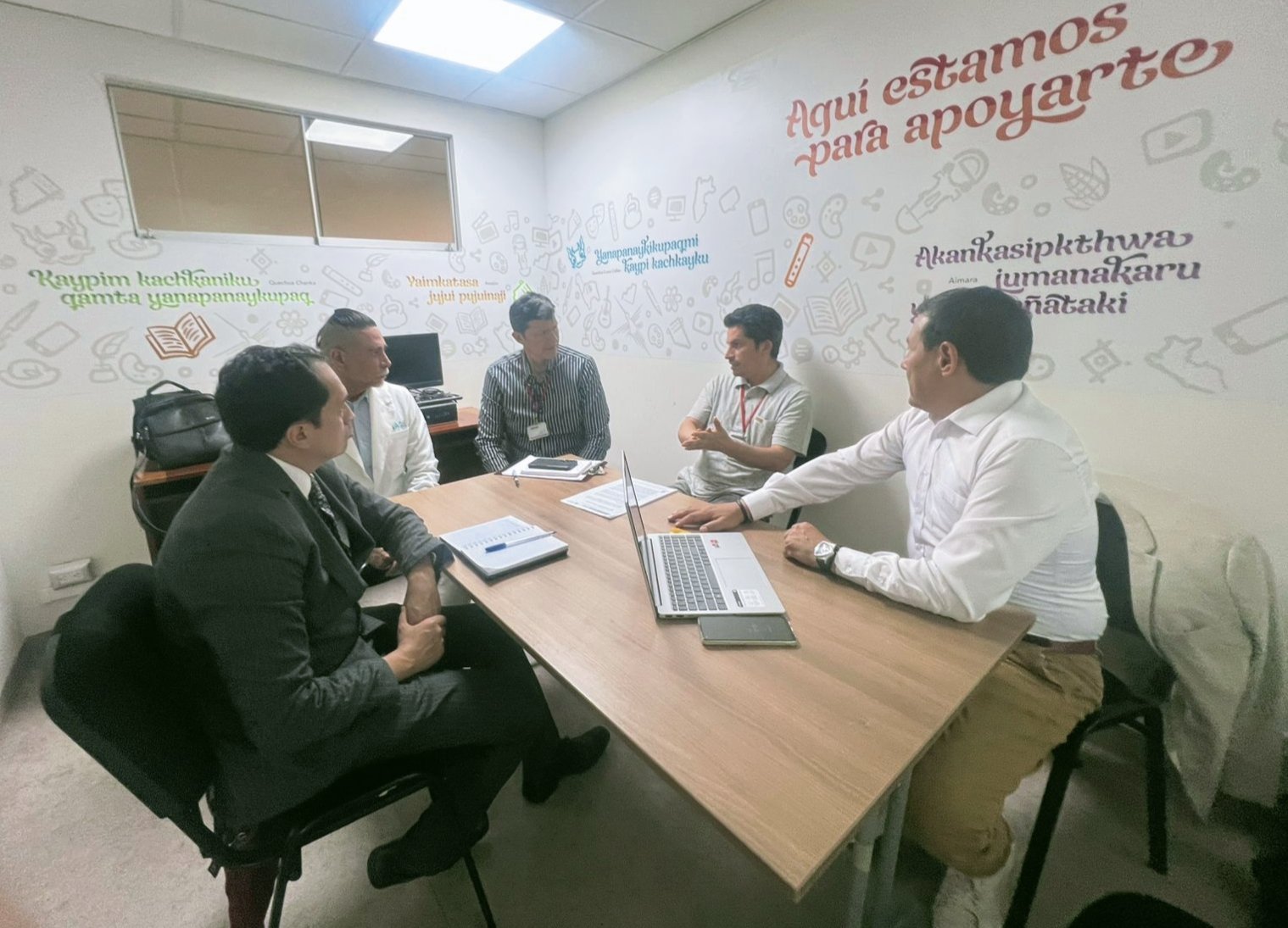
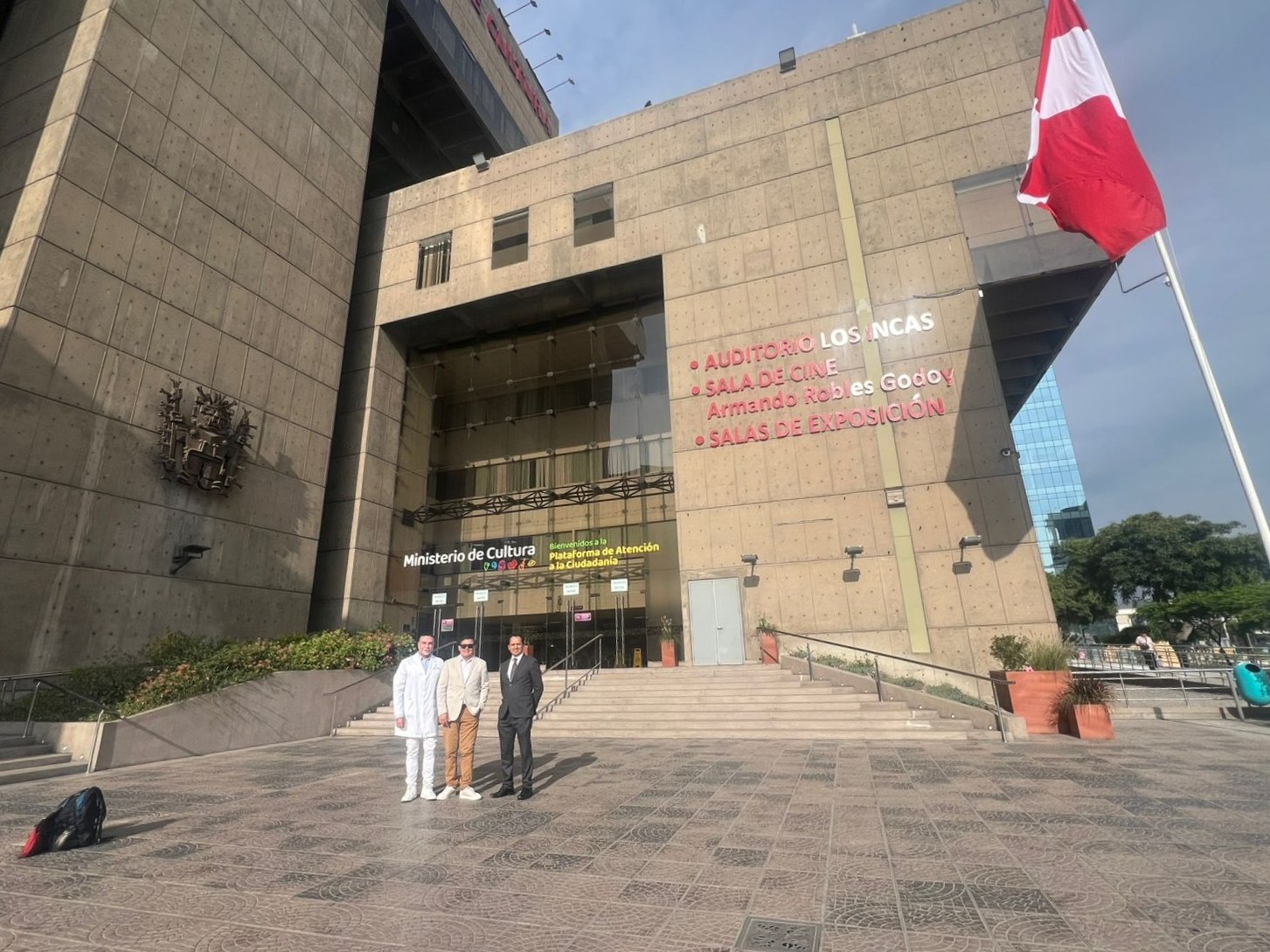
Learn more about this major updateAfter three letters addressed to the Presidency of Peru, the Ministry of Culture agrees to meet with Jois Mantilla to obtain relevant and firsthand information. This marks the first time in nearly 8 years that a ministerial administration has arranged such a meeting regarding the tridactyls.

Jois Mantilla, accompanied by lawyer Jorge Flores and forensic doctor Dr. David Ruiz, meets with representatives from the Ministry of Culture. The meeting involves cross-referencing claims, clarifying points, and discussing areas of agreement and disagreement to improve the research process and heritage management.

Representatives from the Ministry, including licensed professionals and an archaeologist from the Recovery area, attend the meeting. They are informed about the latest specimens analyzed by forensic experts, biologists, and doctors from three countries. The surprise on their faces is noted.

Both parties agree to maintain contact and work toward better relations to uncover the truth about this extraordinary discovery.
Researchers and professors from Universidad San Luis Gonzaga are reportedly working on a formula to improve understanding with Ministry of Culture officials, aiming to move past tensions and accusations. Jois Mantilla expresses hope for a new chapter in the investigation.
Dr. Edgar Hernández Huaripaucar, a leading researcher of the tridactyls, dies in a car accident.
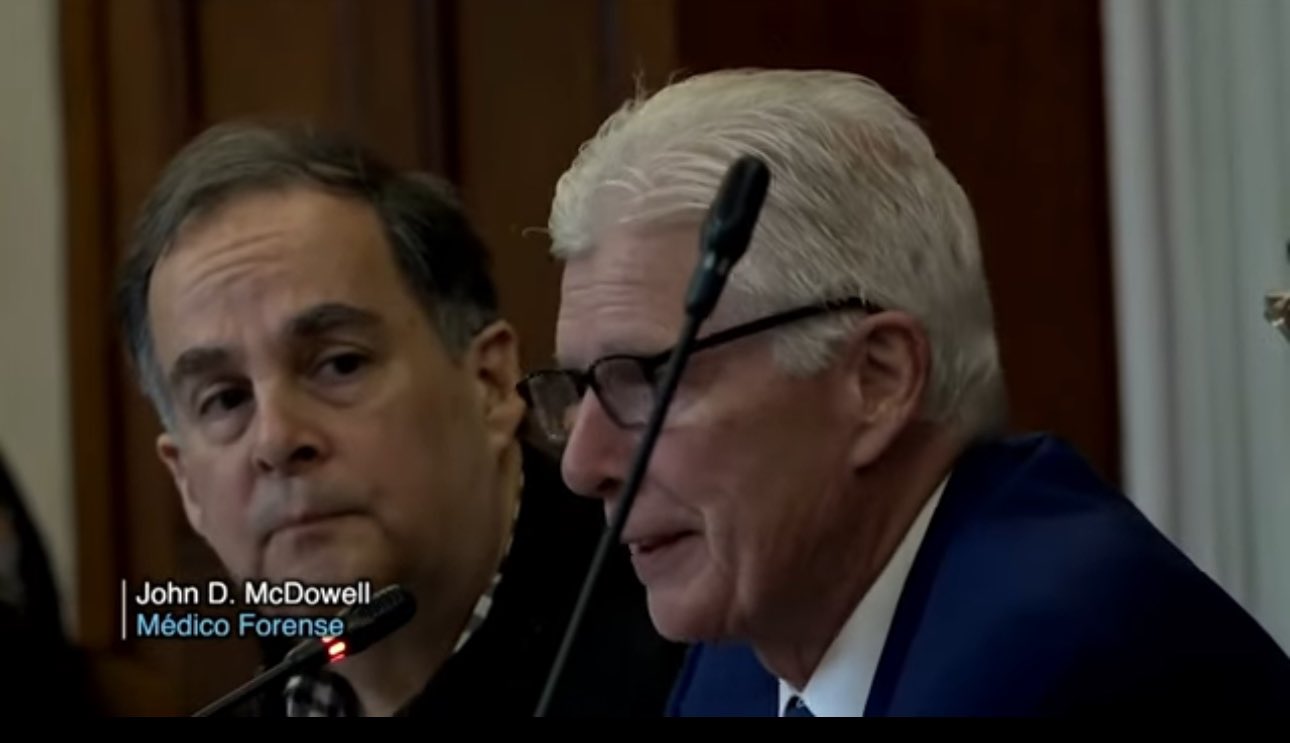
A public hearing on the Nazca tridactyls is held in the Peruvian Congress, with forensic experts and scientists presenting their findings.

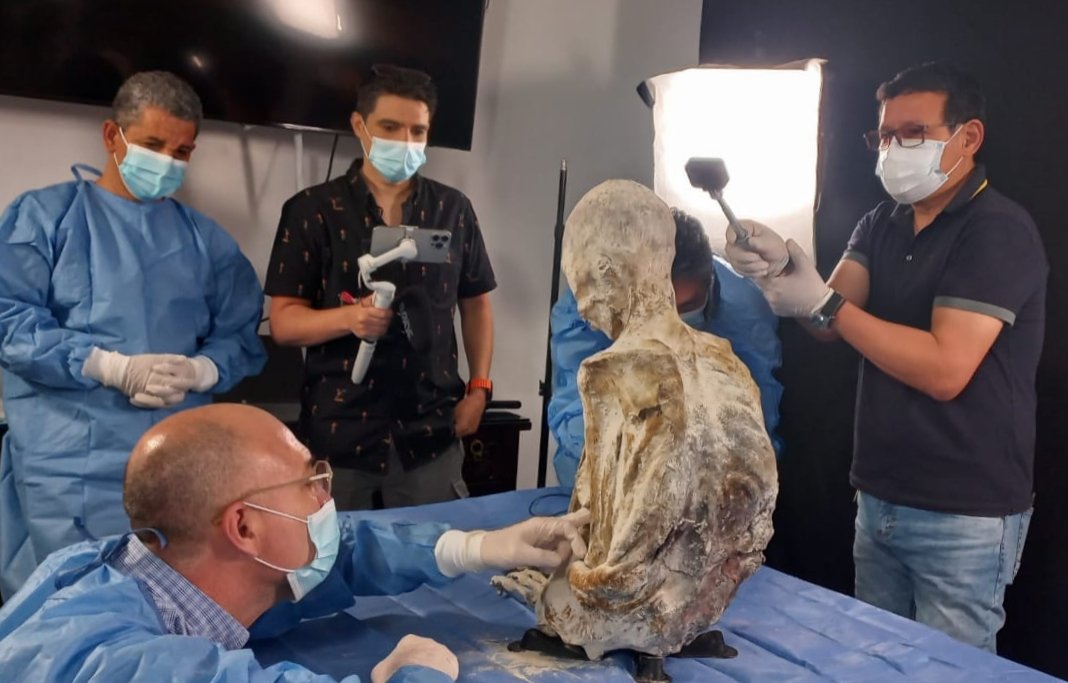
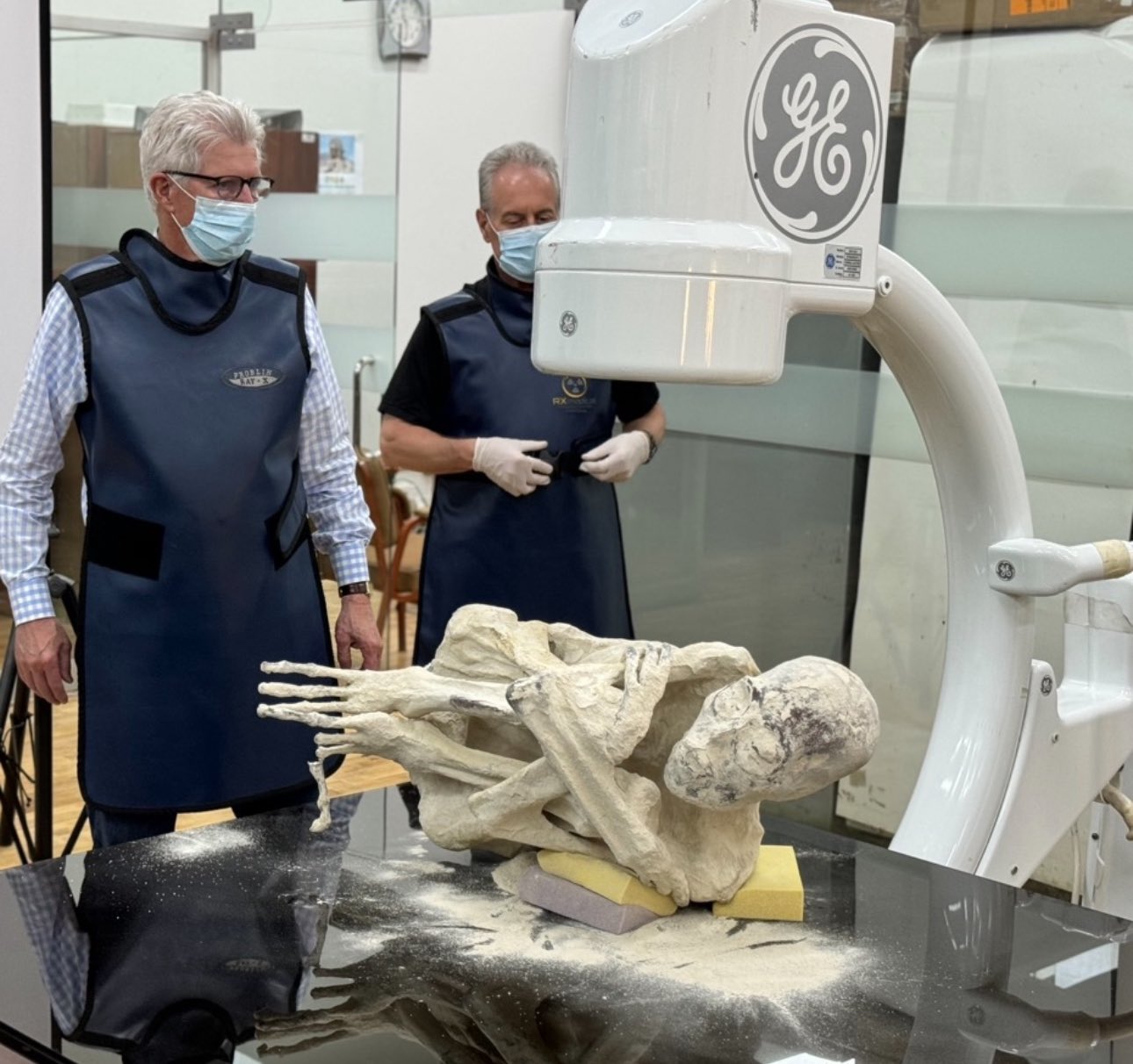
The Peruvian Ministry of Culture is allowed to observe the specimens at UNICA, with radiologist Enrique Carlos Candia finding no signs of tampering.
Ministry of Culture packaging Maria to take her to the hospital.
Dr. John McDowell writes a letter to Peruvian authorities requesting comprehensive research on the tridactyl specimens.
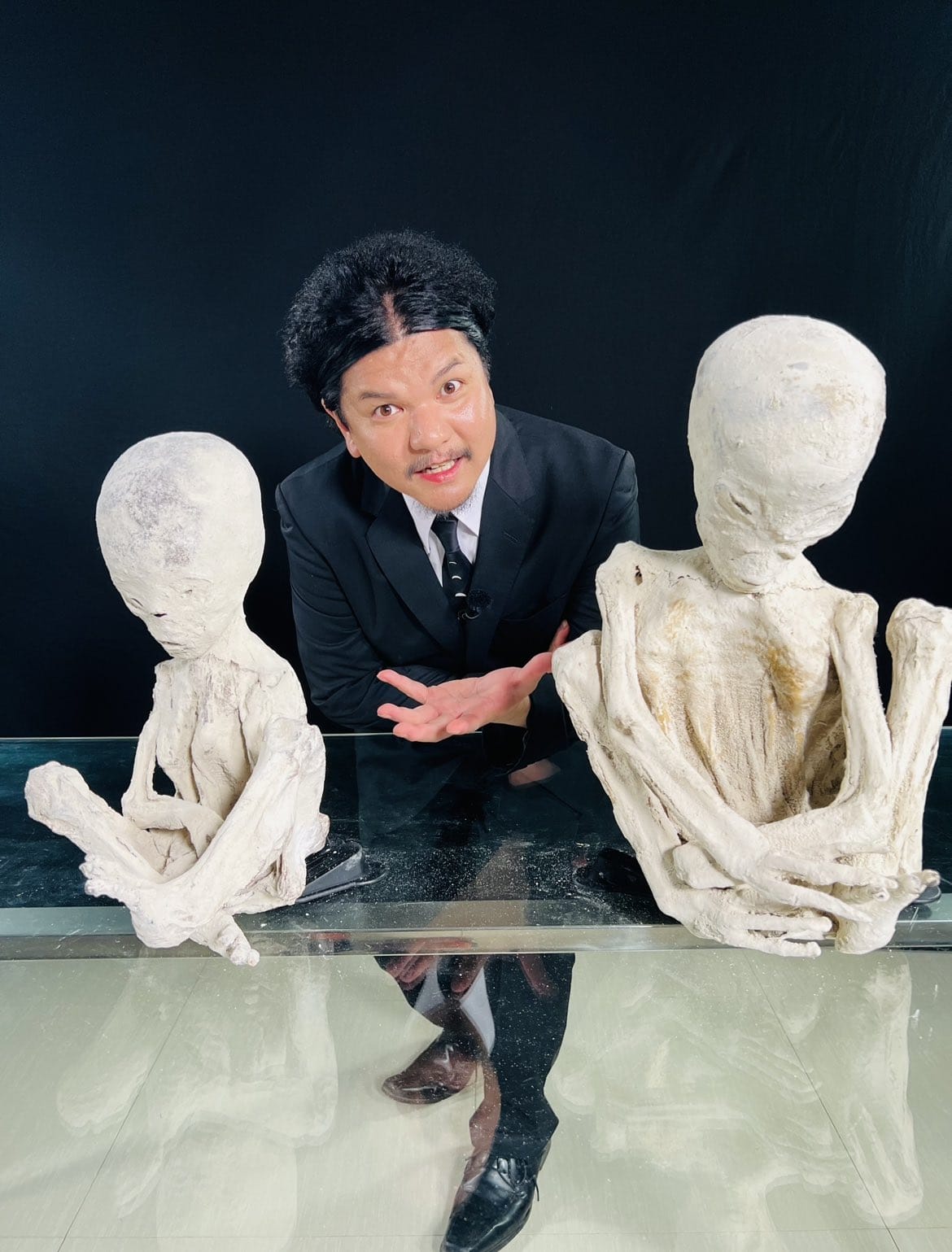
TV Tokyo visit to Peru to see the tridactyl discovery, highlighting the international interest in these unique specimens.

Forensic doctors John McDowell, James Caruso, and William Rodriguez examine the specimens at UNICA, confirming their scientific relevance.

The Genetics and Molecular Biology Unit of the Peruvian Ministry of Culture states they lack the equipment to analyze the tridactyl DNA samples.
Further studies and presentations are made in the Mexican Congress, with experts supporting the authenticity of the specimens.
The Peruvian Ministry of Culture attempts to raid UNICA to confiscate the tridactyl bodies, but the raid is postponed.
Physicians examine the 60 cm tridactyl "Clara" in Mexico, finding no signs of tampering and confirming the presence of eggs.
Two 60 cm tridactyl bodies are presented in the Mexican Congress during a hearing on UAP (Unidentified Aerial Phenomena) transparency.
The "Miles Paper" is published by Clifford Miles, analyzing the tridactyls as a previously unknown species, possibly not from Earth.
Peruvian congressman Armando Villanueva again presents a bill to study the tridactyls, but it is dismissed.
Ongoing research continues at UNICA, with further studies on the specimens' anatomy, genetics, and metallurgical implants.
A fine needle is inserted into one of "Josefina's" eggs, confirming the material is organic and not stone or crystal. UNICA invites experts to study the specimens, but few respond.
UNICA holds an international press conference, calling for researchers to study the tridactyls. A temporary public exhibition is held.
The Ministry of Culture attempts to confiscate the tridactyls from UNICA, but the university retains custody.
The Peruvian Ministry of Culture concludes that the origin of the specimens cannot be determined, and no crime is proven.
The Universidad Nacional San Luis Gonzaga (UNICA) receives four tridactyl bodies for safekeeping and research.
Mexican genetic bioinformatician Salvador Ángel Romero Martínez prepares a computer study of the genetic data.
French materials scientist Lilian Cristofol analyzes metal pieces associated with the specimens.
Studies reveal the use of cadmium chloride and osmium in the preservation of the specimens, suggesting advanced preservation techniques.
Biophysicist Olivier Sire conducts analysis in France, confirming the biological nature of the specimens.
Results of the analyses are presented in the Peruvian Congress, with experts from Peru, Mexico, and Russia supporting the authenticity of the specimens.
High-resolution CT scans (128 cuts per square inch) are conducted on "Maria," "Josefina," and "Wawita," confirming biological continuity and the presence of eggs.
Peruvian congressman Armando Villanueva presents a bill to declare the tridactyls of historical and cultural interest, but it is ridiculed and dismissed.
Instituto Inkarri recovers another small body and a large tridactyl hand (38 cm).
Instituto Inkarri examines three new small specimens, two of which contain eggs.
A press conference is held in Lima with Instituto Inkarri, Jaime Maussan, and Gaia TV presenting preliminary laboratory results.
A mummified infant named "Wawita" is examined.
X-rays reveal three possible eggs inside "Josefina." First tomographies are taken of "Maria," "Josefina," and "Alberto." A new specimen, "Victoria," is recovered.
A larger tridactyl specimen named "Maria" is shown and temporarily lent for analysis. X-rays and DNA samples are taken.
Jaime Maussan, Mexican journalist, and a team of scientists (including Dr. José de Jesús Zalce Benítez) arrive in Cuzco, Peru, to study the specimens.
Another complete mummified body, "Josefina," is recovered. Two mummified brains, carved stones, bone fragments, and metal objects are also found. Tissue samples are sent to labs outside Peru.
Instituto Inkarri raises €39,500 for DNA analysis, radiocarbon dating, and X-rays. A complete small mummified body (60 cm) named "Alberto" is recovered and studied.
Instituto Inkarri recovers two mummified heads and three mummified hands. Peruvian surgeon Edson Salazar Vivanco analyzes the specimens, suggesting DNA analysis and radiocarbon dating.
Thierry Jamin, Director of Instituto Inkarri, writes to the Peruvian Ministry of Culture urging them to investigate the findings. Instituto Inkarri travels to Nazca to meet the huaqueros (tomb raiders) and obtains a small specimen for X-rays.
Paul Ronceros and Leandro Benedicto Rivera actively sought open-minded and caring scientists to dedicate themselves to studying the findings.
Instituto Inkarri begins efforts to find scientists willing to study the findings.
Small, less credible specimens are shown to Mr. Dante Rios Tambini by Paul Ronceros (a.k.a. Krawix). Specimens are examined at Instituto Inkarri in Cuzco, and no fraud is detected.
Leandro Benedicto Rivera Sarmiento (a.k.a. Mario Peruano) allegedly discovers a cave in the Peruvian desert (between Palpa and Nazca) containing tridactyl specimens, including complete bodies, body parts, and artifacts.
Mario speaks about how he made the discovery.
The discovery includes not only tridactyl specimens but also artifacts such as carved stones and metal adornments. Some specimens are suspected to be ancient offerings, while others are genuine biological original individuals.