
Switch language
Estudios de ADN
NCBI (National Center for Biotechnology Information) (USA)
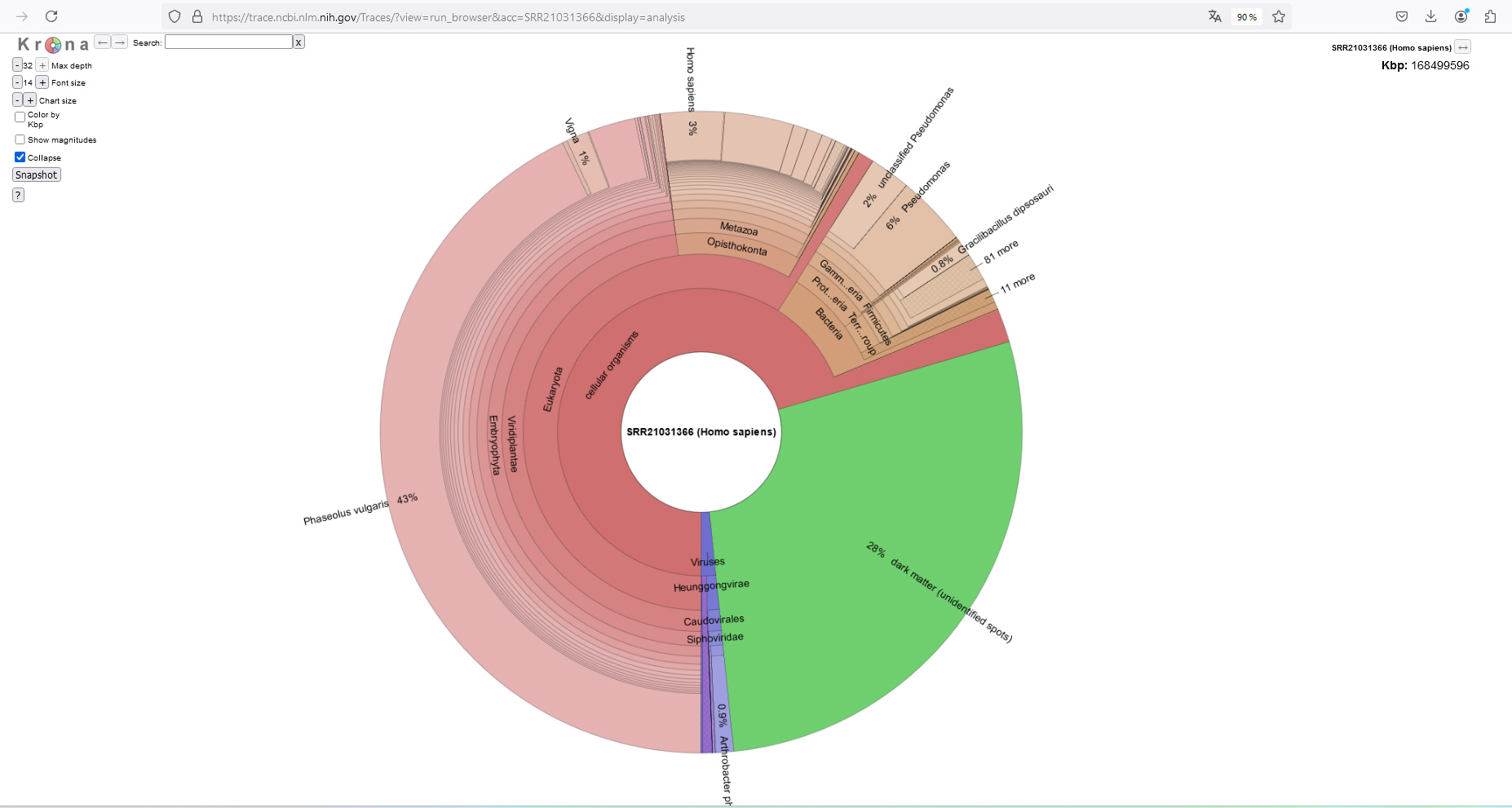
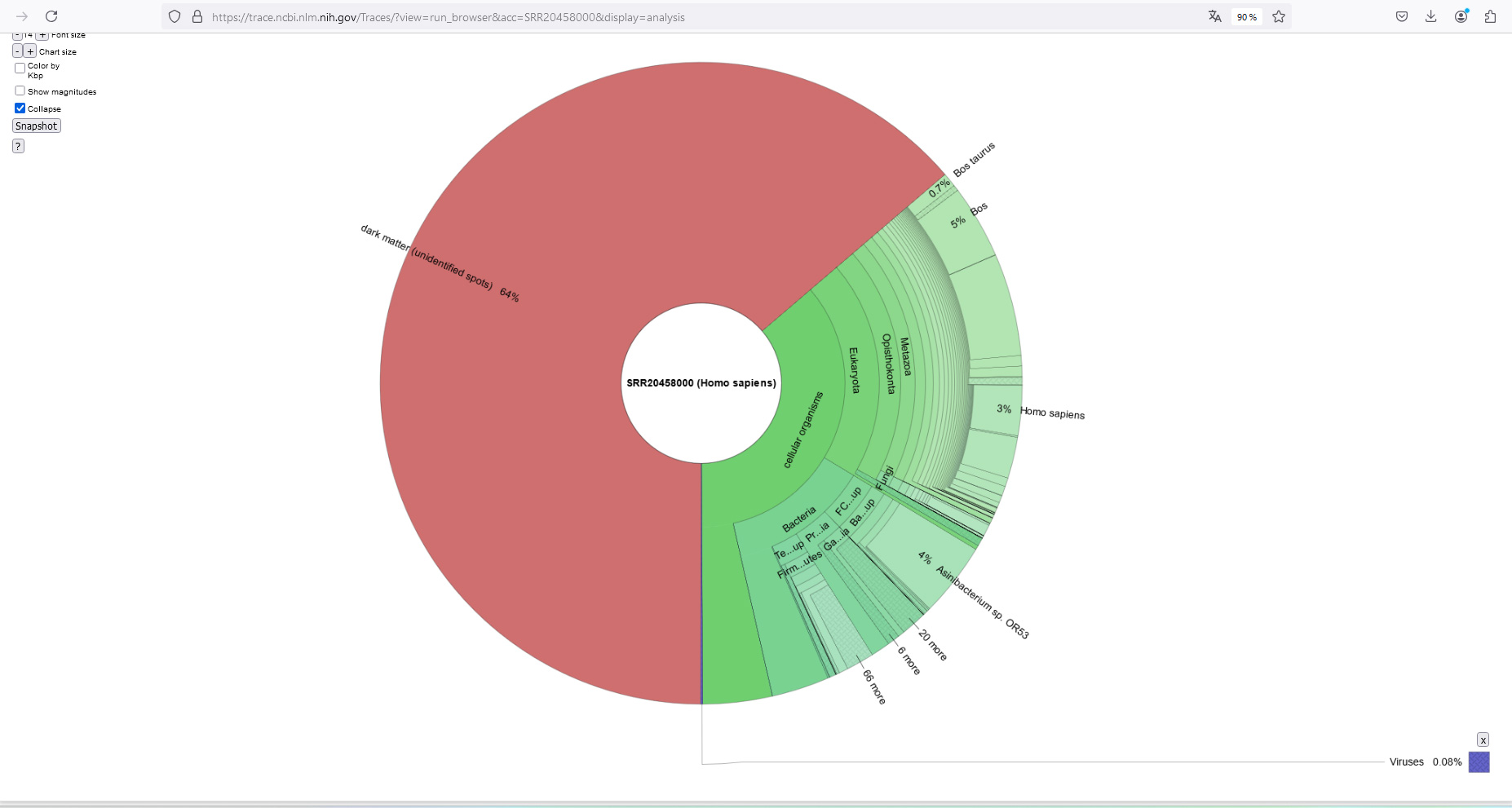
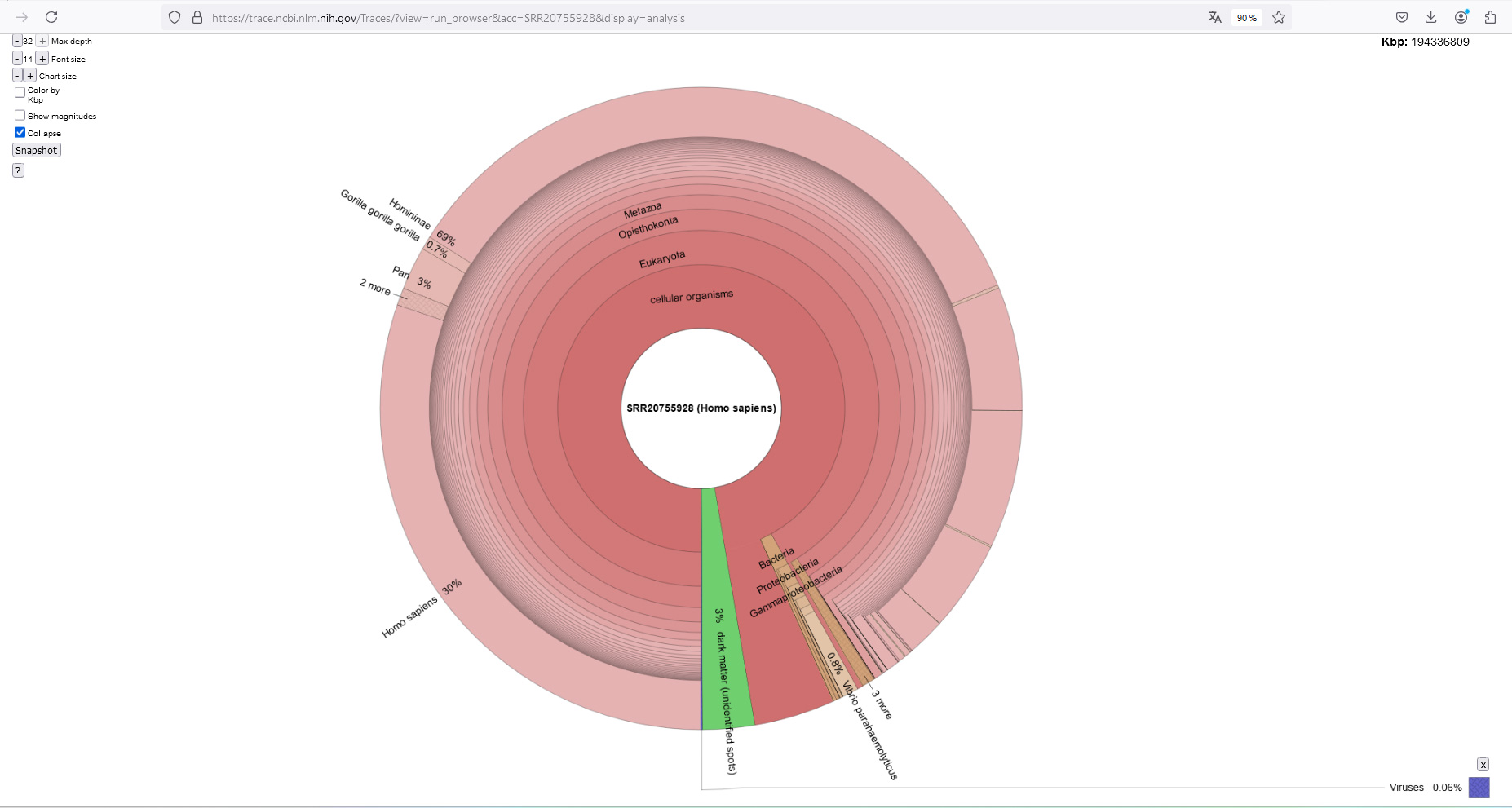
Las secuencias de lectura de 2 muestras de las momias Victoria y María han sido integradas en el NCBI. Los datos están disponibles para todos los investigadores que deseen continuar los estudios sin restricciones.
- Ancient0002: Victoria – hueso del cuello
- Ancient0004: Victoria – tejido muscular
- Ancient0003: María – hueso de la mano
Metodología
- El estudio utilizó Secuenciación de Nueva Generación (NGS) para analizar el ADN de muestras de tejido.
- Los datos se subieron al Sequence Read Archive (SRA) en la Biblioteca Nacional de Medicina de EE. UU. para compararlos con genomas conocidos.
Análisis de Muestras y Resultados
Especimen: "Victoria" (60 cm tridactyl)
- Muestra de hueso del cuello (WGS Ancient0002):
- Se identificó el 72.07% de las lecturas de ADN.
- El 70.45% de estos eran de Homo sapiens (contaminantes), y el resto de bacterias y virus.
- El 27.93% de las secuencias no coincidió con genomas conocidos.
- Muestra de tejido muscular (WGS Ancient0004):
- Solo el 36.28% de las secuencias coincidió con organismos conocidos.
- El 63.72% de las secuencias no coincidió con ningún ser vivo conocido.
- No se encontró ADN mamífero, incluido humano, en la porción identificada.
- Conclusiones para Victoria:
- Una gran parte del ADN permanece sin identificar.
- Hay una probabilidad mayor al 90% de que este organismo no sea humano.
- Hay una probabilidad mayor al 50% de que este organismo no esté relacionado con ninguna especie conocida.
Especimen: "María" (1.60 m, humanoide)
- Muestra de hueso de la mano (WGS Ancient0003):
- Se obtuvieron 647,789,366 secuencias de lectura.
- El 97.38% de estas fueron identificadas; el 2.62% permaneció desconocido.
- El 30.22% de las secuencias identificadas coincidió con Homo sapiens.
- El 3.05% coincidió con el género Pan (Pan troglodytes y Pan paniscus), lo que sugiere una conexión con chimpancés o bonobos.
- El 2.62% no identificado podría explicar rasgos únicos como el tridactilismo.
- Conclusiones para María:
- María es probablemente un organismo híbrido, potencialmente de una nueva especie.
- El nombre científico propuesto es Homopan tridactyla.
- El análisis del haplogrupo (de la investigación de Alaina Hardie) sugiere:
- Haplogrupo mitocondrial M20a (vinculado a poblaciones de Myanmar).
- Haplogrupo del cromosoma Y O2a1c1a6a2 (vinculado a poblaciones Han chinas).
Correlación con el Reporte de Abraxas Biosystems (2018)
El informe de Abraxas Biosystems, realizado en 2018 y recientemente revisado por Ricardo Rangel Martínez, proporciona una correlación valiosa con los hallazgos del análisis de 2023. Los puntos clave incluyen:
- Confirmación del alto contenido de ADN humano en "María" (Ancient0003), con un 95.07% de las lecturas mapeadas al genoma humano, consistente con el 97.38% identificado en el análisis de 2023.
- Confirmación del haplogrupo mitocondrial M20 y del sexo masculino para "María," en línea con los hallazgos de 2023.
- Para "Victoria," el informe encontró que aproximadamente el 27% (Ancient0002) y el 90% (Ancient0004) de las lecturas no pudieron ser clasificadas, apoyando la conclusión de un alto porcentaje de secuencias no identificadas.
- El uso de métodos avanzados como el esbozo de ADN y el filtrado iterativo proporciona evidencia adicional de la naturaleza antigua del ADN y la presencia de organismos novedosos.
Para obtener más detalles, consulte el artículo actualizado en ResearchGate.