
Tridactilos vs Humanos
Un estudio científico exhaustivo que compara las estructuras biológicas únicas de los especímenes tridáctilos con la anatomía humana moderna mediante tomografía computarizada avanzada.
Ensayo pictórico © K H Fung / Tridactyls.org
Informe comparativo: tridáctilos humanoides vs. humanos
Metodología
- Especímenes incluidos: María (adulto mayor, sexo incierto con cromosoma Y); Montserrat (hembra joven embarazada); Sebastián (adolescente).
- Preservación: Cadáveres desecados con órganos internos, tendones, coprolitos con semillas, restos de cerebro e implantes metálicos fusionados con el tejido.
- Técnicas de CT: Se utilizaron MPR, MIP, VR3D, SSD, semitransparencia y colores falsos. Se superaron los artefactos del metal y la tierra de diatomeas.
Especímenes Destacados en este Estudio Comparativo
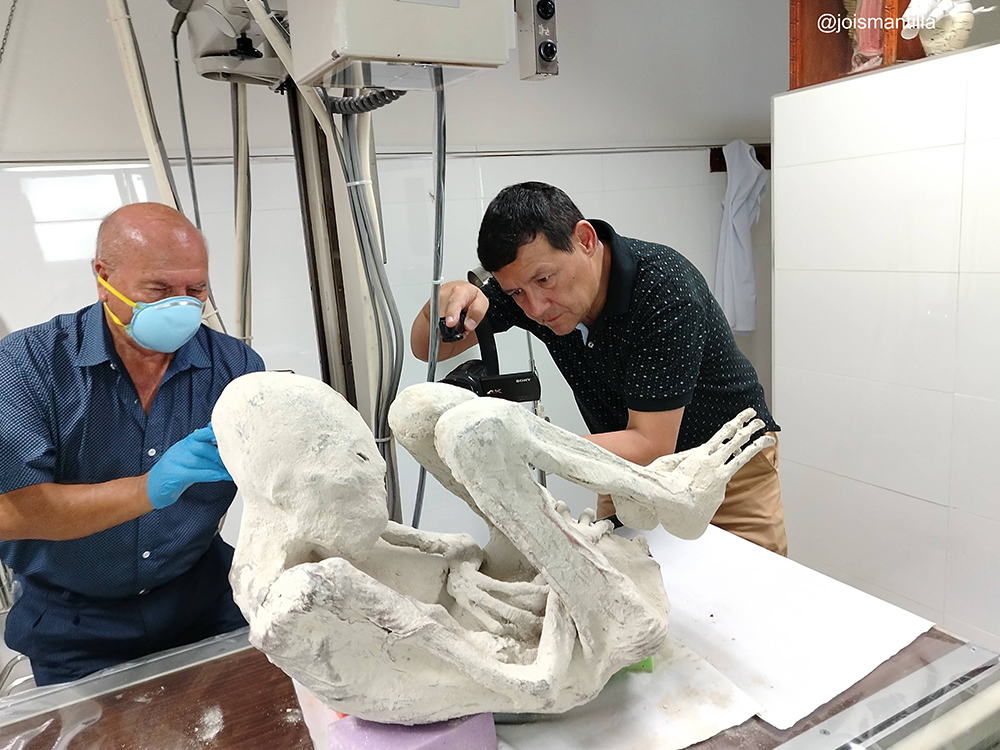
Montserrat
El Dr. Zúñiga y Jois Mantilla documentando al espécimen gestante Montserrat durante una revisión física y radiológica detallada.
Saber más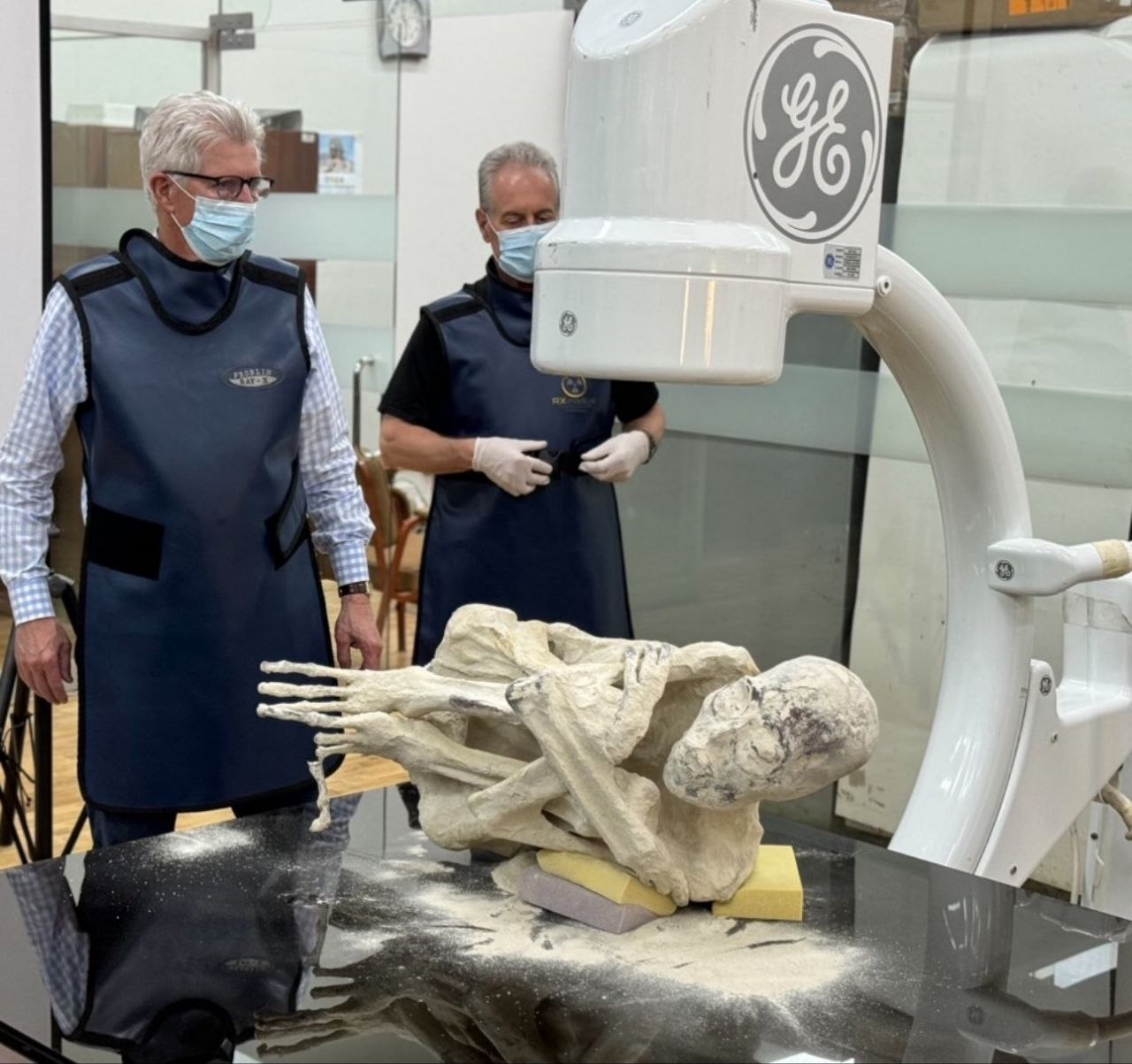
María
El experto forense estadounidense Dr. John McDowell lidera un equipo internacional en el examen del espécimen María.
Saber más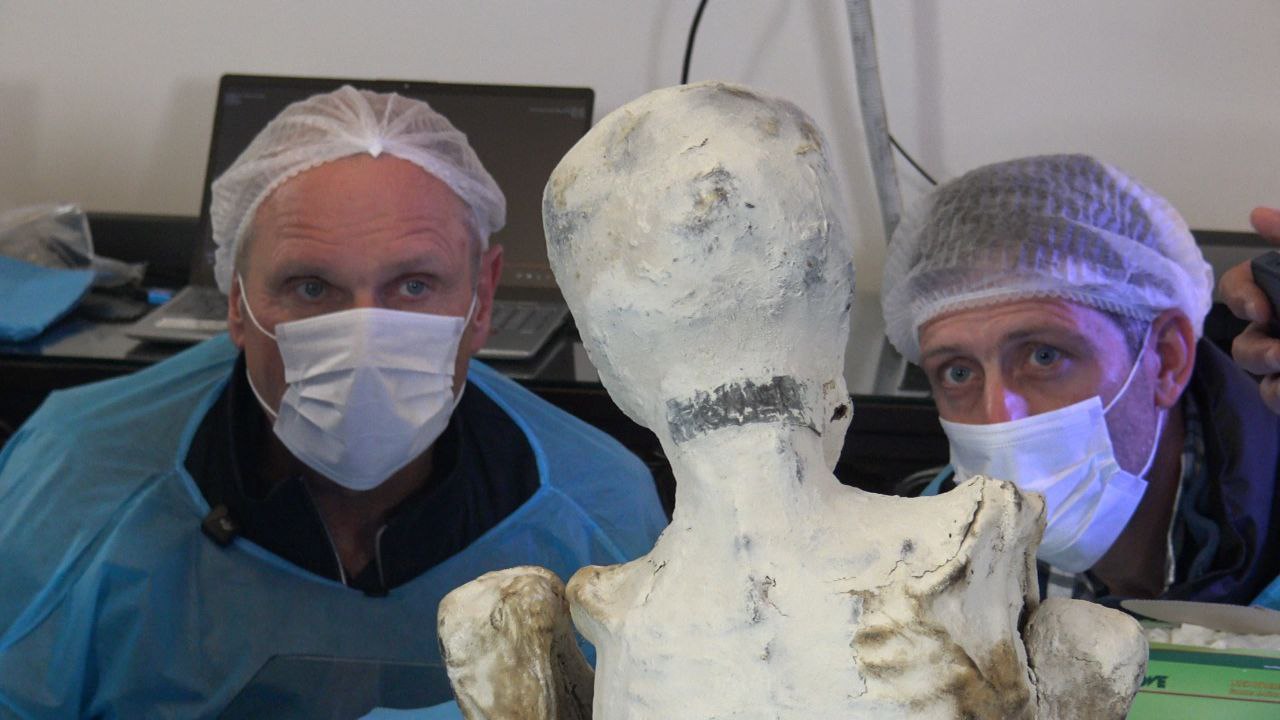
Sebastián
El periodista de investigación Ross Coulthart y J.P. Hague observando al espécimen adolescente Sebastián para NewsNation.
Saber másSimilitudes Anatómicas
| Característica | Tridáctilos | Comparación Humana |
|---|---|---|
| Huesos Largos | Pares (radio/cúbito, tibia/peroné) | Disposición humana estándar |
| Articulaciones | Codos/rodillas con rótulas, hombros, caderas de bola y cavidad | Funcional y estructuralmente similares |
| Sacro-ilíaco | Articulaciones sacro-ilíacas claras | Presente en humanos |
| Base del Cráneo | Marcas vasculares | Plano biológico similar |
| Dental | Estructura dental muy similar | Morfología similar |
| Órganos Internos | Restos de corazón, vasos, diafragma, intestinos, cerebro bilobulado | Sistemas de órganos de morfología similar |
Diferencias Anatómicas
| Característica | Tridáctilos | Comparación Humana |
|---|---|---|
| Cráneo | Fusión temprana de suturas, elongación posterior | Suturas presentes, forma más redonda |
| Órbitas/Cara | Órbitas grandes, inclinadas y muy separadas | Órbitas orientadas hacia adelante y más cercanas |
| Nariz/Orejas | Pabellones auriculares variables o ausentes | Nariz prominente y orejas externas |
| Manos | 3 dedos, 5 segmentos cada uno, sin palma | 5 dedos, 3 segmentos, palma metacarpiana |
| Pies | 3 dedos, 4 segmentos cada uno, tipo garra, sin metatarsianos | 5 dedos, estructura tarsiana/metatarsiana |
| Columna | Coxis no identificado en ‘Montserrat’; identificable en ‘Sebastian’; Ausente en ‘Maria’ debido a trauma sacro con pérdida de tejido y hueso; discos calcificados en especímenes jóvenes | Cóccix presente, los discos se calcifican con la edad/enfermedad |
| Tórax/Abdomen | Pectus excavatum, sin ombligo, útero descentrado | Tórax normal, el pectus excavatum es una variante normal, ombligo presente |
| Implantes | Implantes metálicos fusionados sobre el tejido capilar e intra - óseos (María) | No ocurren naturalmente |
Conclusión
La imagenología por CT demuestra estructuras biológicas sofisticadas, disipando las afirmaciones de fraude. Existe evidencia firme de una especie de homínido bípedo desconocido.
- Las estructuras biológicas sofisticadas indican autenticidad.
- No se encontró evidencia de manipulación quirúrgica o fabricación.
- Especie de homínido bípedo desconocido con características anatómicas distintas.
- Los artefactos auténticos sugieren presencia histórica.
Documento de Investigación
Hallazgos Principales
- Evidencia de entidades biológicas reales: especie de homínido bípedo desconocido, no un fraude
- La imagenología por CT demuestra estructuras biológicas sofisticadas, disipando las afirmaciones de fraude. Existe evidencia firme de una especie de homínido bípedo desconocido.
Nota: Los investigadores y expertos que aparecen en este estudio participan en el análisis científico y la documentación de los especímenes. No son los autores del presente ensayo pictórico.
Dr. K.H. Fung
Radiólogo Jubilado (más de 40 años de experiencia en radiología diagnóstica y visualización 3D)